The Truce aka La tregua (1997) or Primo Levi´s Odyssey from Auschwitz back home

The late Italian writer Primo Levi was one of 650 Italian Jews who were deported to Auschwitz. He was one of only five to survive.

All of his life he suffered of survivor´s guilt and feelings of shame remembering how much they were degraded. In 1987 he very probably committed suicide. I say probably since it was not 100% established but everything points to it.

He wrote two famous books about the Holocaust.  If this is a man aka Se questo è un uomo about his time in Auschwitz and  The Truce aka La tregua about his odyssey back home from Auschwitz to Italy.

Francesco Rosi’s movie The truce aka La tregua is based on the second of those books.

Did you ever wonder what happened to the prisoners of Auschwitz after they had been freed by the Red Army? Being free was one thing but getting back home another one altogether.

Levi´s odyssey brought him first farther away from his home country Italy, to Minsk.  You could not just board a train at leisure. The railway lines had mostly been destroyd. And what about food without money in countries whose populations were starving? It takes Primo months until he gets back.  He finally arrives after stressful moments of a long and complicated journey, mishaps, dangers but also of  joy and rediscovering the beauty of life.

I knew John Turturro from his movies with the Coen brothers where he plays mostly a comical character. This is a very different role but it felt as if it had been created for him. He plays this sad, pensive and gentle intellectual in a very endearing manner.

The last scene shows Primo writing. That’s what he will do from now on, that and working as a chemist. And he will leave two of the most accurate and painful accounts of Auschwitz and the journey home that we have.

People who read the book La tregua criticize the movie relentlessly but I think we should also see it as a homage to a man who had the courage to testify but never really got over the fact to have been one of a very few to survive.

I liked this movie, I really did, probably thanks to Turturro´s soulful acting.

During the last scene of the movie, when we see Primo Levi writing, we hear a voice in the off reading his poem If  This is a Man aka Se questo è un uomo.

Please, take a few minutes and read it.

Voi che vivete sicuri You who live safe
Nelle vostre tiepide case In your warm houses,
voi che trovate tornando a sera You who find warm food
Il cibo caldo e visi amici And friendly faces when you return home.
Considerate se questo è un uomo Consider if this is a man
Che lavora nel fango Who works in mud,
Che non conosce pace Who knows no peace,
Che lotta per mezzo pane Who fights for a crust of bread,
Che muore per un sì o per un no. Who dies by a yes or a no.
Considerate se questa è una donna Consider if this is a woman
Senza capelli e senza nome Without hair, without name,
Senza più forza di ricordare Without the strength to remember,
Vuoti gli occhi e freddo il grembo Empty are her eyes, cold her womb,
Come una rana d’inverno. Like a frog in winter.
Meditate che questo è stato Never forget that this has happened.
Vi comando queste parole. Remember these words.
Scolpitele nel vostro cuore Engrave them in your hearts,
Stando in casa andando per via When at home or in the street,
Coricandovi alzandovi When lying down, when getting up.
Ripetetele ai vostri figli. Repeat them to your children.
O vi si sfaccia la casa Or may your houses be destroyed,
La malattia vi impedisca May illness strike you down,
I vostri nati torcano il viso da voi May your offspring turn their faces from you.

Mongol: The Rise to Power of Genghis Khan (2007)

What is the best word to describe this movie? I would say it is enthralling. The cinematography is stunning. The vastness of the Mongolian steppe would leave no one indifferent but captured in such wonderful pictures there is no escaping the enchantment. These amazing views are underlined by one of the most convincing scores I have heard in any movie recently. Chanting monks, female singers, musical parts. Picture wise it did remind me of Urga aka Close to Eden, a  gorgeous Mongolian movie I haven seen a few years back. We can easily deduce that material life in the Mongolina steppe has not changed much. People still live in yurts, even the clothes bear a certain resemblance.

The Russian movie Mongol is the first installment of a trilogy on the live of Genghis Khan. It shows his childhood, how he chose his wife Borte (Khulan Chuluun), the great love of his life, how his father is killed and how he later has to fight for his survival until he becomes the unifier of the Mongolian tribes and their leader. He is not yet called Genghis Khan, he is still Temudjin (Tadanobu Asano) a boy from a modest background whose father was one of many Khans.

Life at those times seemed to have been incredibly hard. The tribes were stealing from each other (horses and women),  assaulted each other, killed each other. It is hard to imagine a life of greater insecurity than this. Whenever the future Genghis Khan triumphed over someone he was shown as very just and generous. As a consequence of this behaviour people wanted to follow him, they chose him as their leader.

The Genghis Khan we see is someone who inspires pity because of the hardships he has to endure and admiration for the way he treats people, especially his wife to whom he is very attached.

I cannot say much about the historical accuracy. Usually Genghis Khan, who was once the leader of the greatest empire that ever existed, is shown as a merciless cruel despot. There is not much room for beauty in those tales of his life. I tried to find out more and apparently it depends on the sources that are being used whether his portrait is more negative or more positive.

I was fascinated by the spiritual aspects in the movie, the deity that appeared in the form of a wolf. The wolf  is very meaningful to the people of the Mongolian steppe. Certainly the depiction of the Mongolian religion is not accurate but I liked this  dimension.

I thought the acting was excellent but have read that it has been criticized that a Japanese actor stars as Temudjin. The accents of the actors seem to be painful to Mongolian ears as well. I even read that some actors spoke Mandarin Chinese which was not yet spoken at the time… I don´t speak any of those languages therefore I was not bothered.

I think this is a very special, aesthetic, riveting movie and  I am not surprised it was nominated for an Oscar and won many prizes.

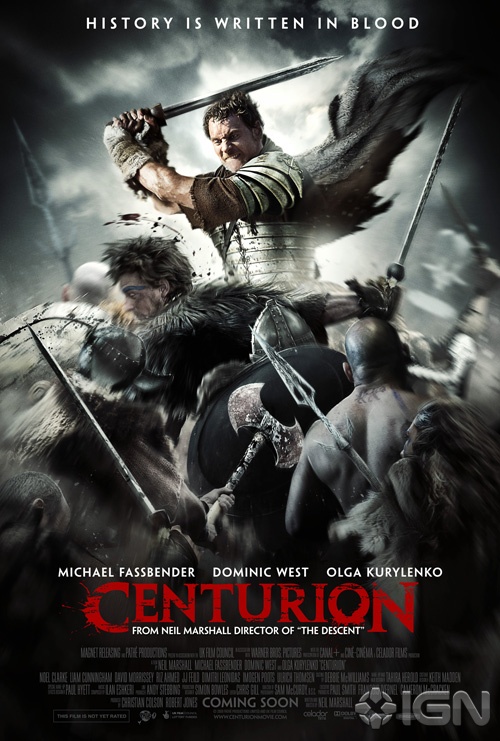
Centurion (2010): A little bit of Gladiator, King Arthur and 300

When I started this blog I wanted to stick to war movies in the strict sense of the term only but now I feel I am in the mood for more liberties. A few months back I would not have included Centurion but now I do. I would not have mentioned Gladiator, King Arthur or 300 either. (If I did, King Arthur would be high up in my Top 10, probaly even making Black Hawk Down step down.)

Be it as it may, to compare Centurion (a British movie by the way) to those above mentioned movies is very unfortunate for it because it is not up to the comparison, I’m afraid. Nevertheless it is  entertaining. However, compared to the three others, Centurion is super gory. And there are a lot of very combative warrior women in it. By the way, Dominic West, from The Wire,  is in this one too but he is not the main character. He stars as General Vilnius. Michael Fassbender has the leading role as the Centurion Quintus Dias. The German actor Fassbender could already be seen in 300, Inglourious Basterds and The Devil’s Whore, to name but a few of his movies.

The year is 117 AD. The Roman Empire stretches from Spain to Egypt and as far as the Black Sea in the East. Only Britain is fighting off its invaders. The Empire is stopped by the savagely fierce Picts.  Centurion Quintus Dias is the only survivor of a Pictish raid. He joins the legendary Ninth Legion of General Vilnius who is on a mission to erase the Picts and their leader Gorlacon from the face of the earth. When they are ambushed and the general is captured Quintus Dias is left alone with a small platoon far behind enemy lines. They first attempt to free their general and after this the real hunt begins. Led by a female warrior tracker (Olga Kurylenko), surnamed she-wolf, who has been mutilated by Romans in her youth and sworn to destroy each and every one of them, the Picts hunt them relentlessly. Without the help of a Pictish outcast, said to be a witch, they would not stand a chance but even so, they are soon highly decimated and in great trouble.

As said before, Centurion is really gory. It reminded me of Gladiator because of the battles in the woods. Of King Arthur because of the way they flee and are hunted,  because of the scenerey, mountains and snow and  also because of the female warriors. Same for 300. A little group outnumbered by a fierce enemy. The end however is quite different from the other three.

As I already said, it is not as good as the other three mentioned movies, since it is not  heavy on psychology and the Picts are shown as savages whereas we are led to believe the Romans were faultless,  but it is an  entertaining watch with loads of  battle and fighting scenes.

For a change the trailer is quite true to the movie.

Sometimes in April (2005) Part I

This is Part I of the HBO production Sometimes in April on the war in Rwanda (see Friday’s post) starring Idris Elba and Debra Winger. As I said, I haven’t seen it yet but it looks as if the whole movie has been posted in bits on YouTube. It seems well worth watching.

Some Actors of The Wire and their Roles in Recent War Movies

I am not the most avid viewer of series but there are some I did or do enjoy a lot. Six Feet Under was just excellent and so is True Blood. I also quite like Dexter. One of the best series however is The Wire, pretty awesome. Maybe you liked The Wire too and were wondering what some of the excellent actors did after  the The Wire has ended.

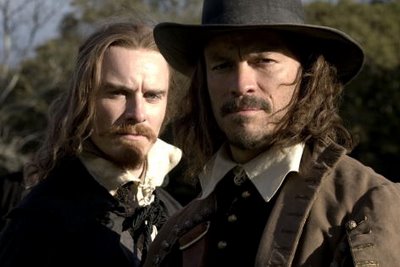
Set during the British Civil War, The Devil´s Whore is a very convincing historical drama.   Dominic West, Detective Jimmy McNulty in The Wire, stars as Oliver Cromwell. This mini series is a must-see for everybody interested in British history. It does take some liberties with some facts but still it is more than just good.

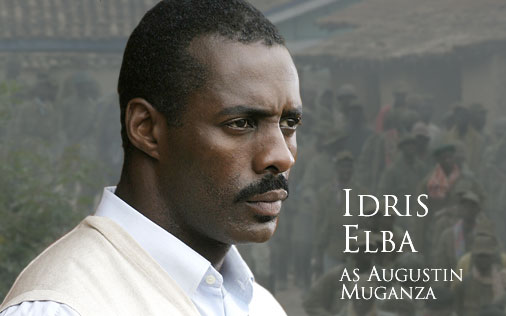
Idris Elba who played the unlikable baddie Russell “Stringer” Bell in The Wire can be seen in the leading role in Sometimes in April. I have not seen this yet but I read that it is the best movie that has been done on the war in Rwanda. Far better than Hotel Rwanda. It is a TV production, maybe that is  the reason why it is not widely known. Unlike Hotel Rwanda it really looks into the history of Rwanda and the reasons for the conflict.

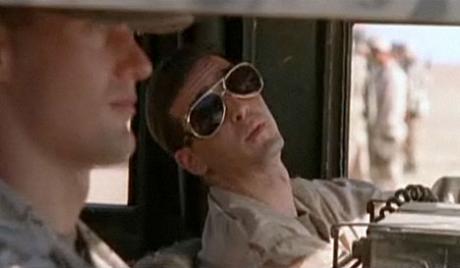
Last but not least, James Ransone, who played the annoying character Ziggy Sobotka, stars as Cpl. Josh Ray Person at the side of Alexander Skarsgard in Generation Kill. A very good performance.

Ok, it is slightly off topic, but what series do you think are outstanding? Any preferences? Suggestions?