Movies on the Napoleonic Wars (1792-1815): A List

I watched the Hornblower series last year and enjoyed it very much. I re-watched Master & Commander and thought once again that it is really a good movie. Finally I discovered the Sharpe series with Sean Bean and I like it a great deal as well (at least those I have seen so far). Considering that they are all based on the Napoleonic Wars, I thought it might be high time to see what else there is. I found quite a few movies, some I have seen a long time ago, like Abel Gance’s Napoléon, and others that I still would like to watch. I also included movies on the man himself as I figured there will not be many biopics on Napoléon leaving out the wars. When I was a child I went through a bit of a Napoléon obsession and remember contemplating his wax figure at the Musée Grévin in Paris with awe. I should have been awed that even as a ten-year old child I wasn’t that much smaller. There are quite a lot of German and French productions of the topic. I did include them although not all of them have been subtitled.

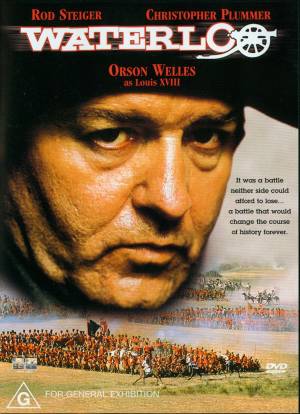
The movies that I would like to watch soon are Waterloo with Rod Steiger, the mini-series Napoléon and Ridley Scott’s The Duellists.

As ususal any comments, additions or ratings are highly welcome. The Duellists is a movie I wouldn’t have known of, if it hadn’t been for Guy Savage‘s recommendation in a comment.

The Hunt For Red October (1990) A Cold War Submarine Thriller

There are two things that I do not like at all. Spy stories and Cold War stories. Although this isn’t a spy story, it is decidedly a Cold War Thriller. I know that many people like this movie and I am really sorry to say that I found it so boring, that watching it until the end was really, really hard. Plus Sean Connery. I am not too fond of him and I really hate Sam Neill. Still, I can see how one could like it but it was definitely not my cup of tea and I will never ever watch it again.

The Hunt for Red October is based on a novel by Tom Clancy. The basic plot line is the decision of the best Russian sub commander, Cpt Ramius (Sean Connery), to defect with his submarine the Red October (yes, a subtle allusion to the October Revolution and, yes again, the movie is full of such subtleties). The Red October is one huge submarine. The biggest submarine in the world. Additionally it is equipped with a silent jet water propulsion system which enables the sub to evade sonar detection.

Jack Ryan (Alec Baldwin), a sub expert for the CIA, has detected the system and he will be the advisor during this “Cold War goes Speed 3” enthrallment (sorry, I can’t help being sarcastic but I will try to pull myself together from now on). He thinks from the beginning that Ramius might not plan to attack the US as everybody fears but that he might want to defect with a group of his fellow officers.

Things get nasty and complicated when the whole Russian fleet starts to hunt the Red October. The Commander of the Russian fleet is played by Stellan Skarsgrad who is always great to watch even though this is just a very small role.

Tensions are high all through the movie, the chase is action-packed, the acting probably not bad if you like the actors.  But, as said, I am not into Cold War movies. And the language bit was very annoying. First the Russian crew talks Russian – believe it or not – and then they switch to English which doesn’t heighten realism but feels like a parody.

The IMDb rate is 7.6/10. Mine would be overall 1.5/5. Slick, glossy and VERY boring.

Neil Jordan’s Michael Collins (1996) The Irish Fight For Independence

Neil Jordan’s Michael Collins is a UK/US/Ireland co-production. International productions guarantee an international cast which can be nice but in this case, I would say, it did prevent the movie from being great. There is no drama teacher in the world who will achieve to make Julia Roberts or Aidan Quinn sound Irish. Liam Neeson as Michael Collins, Alan Rickman as De Valera and a very young Johnathan Rhys Meyers, striking the fatal blow, are well-chosen.

Michael Collins was probably one of the most controversial and tragic figures of Irish history. A charismatic man who knew how to convince those who followed him. A man who wouldn’t shy away from killing yet didn’t take it lightly.

The movie starts with the Easter Rising in 1916 with Michael Collins rallying the masses against the British occupation. It would take another three years until this initial movement lead to the Irish war of Independence. It is a fierce and bloody war. A the end of the war stands the treaty, something that was unthinkable for 700 years. The British government allowed the Irish Free State but kept the Northern Provinces and wanted the Free State to swear allegiance to the king. Michael Collins considered this to be the best he could achieve and wanted to sign the treaty but the men around the future president de Valera wanted a completely free Ireland and this is where the movement for Independence split into two sections who would fight each other fiercly.

The movie shows us a Michael Collins who is tired of fighting and bloodshed and longs for peace. He is sure, if the treaty isn’t signed the bloodshed will be endless.

An important part of the movie is dedicated to the friendship between Michael Collins and his best friend Harry Boland (Aidan Quinn). For four years they are also caught up in some sort of love triangle as both men love Kitty (Julia Roberts). It takes a while until she confesses that she loves Collins. Her confession is not the only thing that drives the men apart. Politically they are not on the same page anymore. Best friends become enemies.

Michael Collins is shot in 1922 by one of de Valera’s men. This is the beginning of the Irish Civil War.

I liked the movie despite its flaws, one being, as already stated, the choice of American actors, the other being quite a few historical inaccuracies. Apparently Neil Jordan had good reasons for altering the facts. I am not sufficiently familiar with the details to point out what is correct or not. There is one particularly awful scene in which a British tank opens fire on a the players in a sports game. In reality this was much more horrible.

Michael Collins is a fascinating character and I could very well see myself read a biography in the future. He was a leader and an adept fighter. His fighting tactics seem to have inspired quite a few future struggles. The group around him was constantly hunted by British secret agents and policemen. Michael Collins’ tactic was to know more about the agents than they knew about them and then to hunt them down. There are a lot of executions to be seen as they operated according to the dictum “who is not with me is against me”. At times the movie reminded me of movies about the resistance. Torture, execution, changing of sleeping quarters etc.

A while back I reviewed another movie on the Irish War of Independence and the subsequent Civil War, The Wind that Shakes the Barely. Michael Collins is never seen but constantly spoken of in the movie so I was really curious to see this. Comparing the two movies I’m afraid I must say, The Wind that Shakes the Barley feels more authentic, it is a truly outstanding movie.

Despite its flaws Michael Collins being a Neil Jordan film offers a lot and is beautifully filmed. It is as much a character portrait, as the story of a friendship and a romance. I enjoyed it and would recommend it.

The Blue Max (1966) Is it the Best WWI Air Combat Movie?

Some people argue that The Blue Max is the best WWI air combat movie there is. What is certainly interesting is that we see a movie from a German point of view. What is also quite obvious is the fact that it is better than The Flyboys. But does this really make it the best WWI air combat movie?

The Blue Max is an interesting movie because it is more than just an air combat movie. It provides a fascinating character study and shows us what can become of a talented but overambitious person like the main character Bruno Stachel (George Peppard).

At the beginning of the movie Stachel is an infantry man but he gets promoted and becomes a pilot. This is actually an interesting bit and I was wondering how often this really happened in reality. Usually the fighter pilots were hardly aware of what was going on in the trenches. Their idea of war was very often equal to an elegant if deadly pastime. Not unlike hunting only including the two sides of being the hunter and the hunted at the same time.

Pilots during WWI were mostly aristocrats like the famous Baron von Richthofen aka The Red Baron (who can also be seen in a short sequence). From day one the other pilots let Stachel feel that he isn’t one of them. What he doesn’t have in social status he tries to make up for in ambition. It is his one and only goal to earn the medal called the Blue Max that is awarded only after 20 kills. He believes this will earn him the respect of the other pilots.

Stachel is absolutely not a nice guy. He is as unlikable as can be but still there is a certain tragedy in his fate as he unfortunately falls in love with the wrong woman (Ursula Andress), yes, the first Bond Girl).

The way he tries to achieve his goal, The Blue Max, is totally reckless and more than once he endangers himself and his comrades alike.

The movie got a lot of praise for the story which is quite interesting however, I think, it would have benefitted if it hadn’t been that long. Some shortening would have been really good.

What the movie is truly famous for, and for good reasons, is the aviation part. The air combat scenes are very well filmed. Without CGI they achieved to show quite something.

I was not totally convinced by George Peppard. I think the movie would have been better with another lead. On the other hand I thought that Ursula Andress wasn’t all that bad and James Mason was decidedly very good.

I have no idea how I would rate this but I guess 4/5 should do it justice. For the aviation and air combat parts it would deserve 5 points, for the length and the main actor only 3.5.

Even though The Battle of Britain is not a WWI movie, it is the movie The Blue Max has been compared to most often. Look at it any which way you want and you will have to admit that The Battle of Britain is the better movie.

Still it is one of the best WWI air combat movies.

Should you be interested here’s my Favourite Air Combat Movies List.

Historically Misleading War Movies as Seen by the TIME Magazine

I discovered an article today in TIME magazine in which they made a list of 10 historically misleading movies. As was to be expected quite a few of the movies are war movies. The whole article was spurred by the movie The King’s Speech which is also among the 10.

I will only concentrate on the war movies they name and give a brief summary why they chose to include them.

The Patriot (2000)

They critizied that The Patriot portrays British soldiers as evil. Another point was the fact that Benjamin Martin whose character was a mix of different real charcters, was shown as a family man while  Swamp Fox who was one of the real characters was no family man and actively persecuted Cherokee Indians. Further more the movie showed a total ignorance of slavery and whitewashing of history. They consider it to be pure American propaganda.

Robin Hood (2010)

Robin Hood tried to transform myth into history. Although it was correct to transform Richard Lionheart into a bloodthirsty monarch, the accuracy ended there.

Braveheart (1995)

This movie has, according to the TIME Magazine, too many inaccuracies to be named. How about the kilts? Scotsmen in the 13th century didn’t wear belted plaid. Gibson’s Wallace is born poor, the real Wallace was a nobleman. And why is he wielding a Chinese weapon? Wallace never met Princess Isabella and certainly did not impregnate her. At the time the movie took place she was only 9 years old anyway.

300 (2006)

Sparta was not a free city-state at all but on the contrary  known for mistreatment and exploitation of its slaves. The Persians were not as debauched as they are shown and their monarch wasn’t a circus freak.

Pearl Harbor (2001)

Pearl Harbor was mostly criticized for the rearranging of chronological events and its sappy simplistic nationalism.

Yeah well, not so surprising after all. At least I didn’t have the feeling any of the ones mentioned were very accurate or at least not in every element.

What strikes me is the title of the post and its explanation. They actually imply that people learn their history through the watching of movies.

For those of you who are curious about the other movies, here are the non-war movie ones: The Far Horizon, 10 000 BC, JFK, The King’s Speech, Shakespeare in Love.