Ingmar Bergman’s Shame – Skammen (1968)

Ingmar Bergman is one of those film directors I always meant to return to. I have always been impressed by his work. It’s not easy and often a bit depressing but always fascinating. Shame – Skammen is one out of three movies that form a trilogy always starring the same two actors Liv Ullmann and Max von Sydow. If you know Bergman well you know that Liv Ullmann was probably his favourite actress. The other two movies that are part of the trilogy are Vargtimmen -Hour of the Wolf and En passion – The Passion of Anna.

Shame is the only one of the three that you can call a war movie. Bergman is famous for his psychological portraits. He is far less interested in story than in character and Shame is no exception. The movie explores what happens to people during a war. How do they react? How far will they go to save themselves? Is there anything human left in them? The war depicted in Shame never took place but it is inspired by many that did.

Jan and Eva Rosenberg are two artists who live far away from anyone else on a farm. A civil war rages in the country they live in and that’s the reason why the left the city. They are completely apolitical and have no clue what is going on but are still deeply affected. Especially Jan is afraid. He is very nervous. When the war intensifies and comes closer he gets panicky. The country is threatened to be invaded by another country that will try to free the people and when it finally happens, the Rosenbergs are forced to give a fake interview that it is later used against them. They are lucky, Eva is an attractive woman and an officer takes an interest in her. If this hadn’t happened they would both have been tortured and executed. Despite this narrow escape, the war shows its effect anyway. Their relationship is getting worse every day, they fight and scream all the time.

I found the first half of Shame extremely interesting because the atmosphere and the type of war depicted didn’t seem typical for Western European countries and to see Jan and Eva entangled in it made for uncomfortable viewing. This is the type of almost dystopian setting we see in very modern movies, only stripped from any type of heroism. The people in this movie become smaller and meaner, the longer the war lasts. Nobody fights against the oppressor and most certainly nobody fights for anyone lese. It’s a very depressing depiction of humanity.

If you are interested in Bergman, it’s a must-see. If you are more used to American movies and movies with an emphasis on story over character, then it’s rather not for you. I can’t say I liked it (not like the Hour of the Wolf which I loved) because I didn’t like the two main characters but I did appreciate it.

The War Movies of Mel Gibson: A List

There are several actors who have returned more than once to the war movie genre, Mel Gibson is one of them.

While I didn’t always like his characters or had a problem to forget the obnoxious man behind them, some of them are very good. Watching them all you can go chronologically through almost every major war. That’s why I didn’t order them according to the year they were filmed in but according to the year they were set in.

Two of my favourite war movies star Mel Gibson, one is the WWI movie Gallipoli, the other one the Vietnam movie We Were Soldiers. The latter, as good as it is, is also a problematic movie but I will look into that in a future post. I haven’t seen all of those mentioned below and am afraid that some, like Attack Force Z, aren’t exactly memorable. I tried to give them a star rating which is, of course, purely personal.

Braveheart (1995) 13th century Scotland. Inspired by the true story of William Wallace a Scottish rebel. 4*****

The Patriot (2000) American Revolution. An epic drama. A farmer leads the Colonial Militia after his son has been murdered by a British officer. 3.5***

Gallipoli (1981) WWI. Story of two Australian friends who volunteer and fight in the trenches of Gallipoli. 5*****

Attack Force Z (1982) WWII. Secret mission against the Japanese. Not seen probably 2**

The Year of Living Dangerously (1982) Indonesia. Story of a reporter and a photographer. Not seen. Probably 3***

Air America (1990) Laos during the Vietnam war. A pilot is recruited by a corrupt CIA organization. Not seen. Probably 2**

We Were Soldiers (2002)  Gritty infantry combat and portrayal of home front. A bit glorifying but overall too gruesome to not be called anti-war. 5*****

Which ones have I forgotten? Which are the ones you like? Should The Bounty be included?

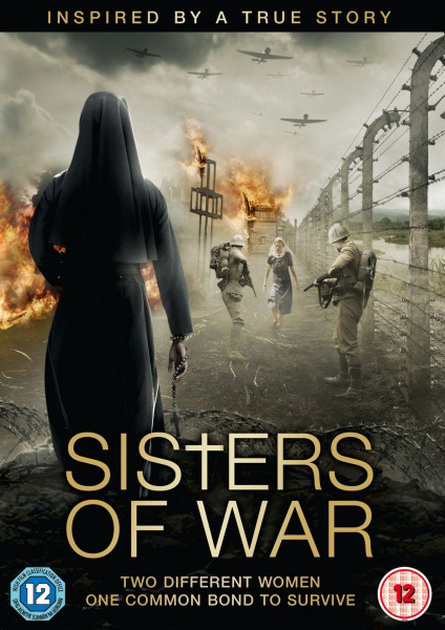
Sisters of War (2010 TV) The True Story of the Australian POW Nurses and Nuns

Sisters of War is an Australian TV movie based on the true story of Lorna Whyte and Berenice Twohill, a nurse and a nun who were held captive for several years by the Japanese during WWII. The film looks a bit “made for TV” but other than that I liked it. There are so many of these forgotten stories and it’s great when a director decides to bring them to our attention.

1942, Vunapope, Papua New Guinea, an Australian hospital camp and mission. Nurses and nuns help the wounded alongside the army doctors. When the troops withdraw, the doctors follow them to help them and, to everyone’s dismay, decide to abandon the nurses, nuns and the wounded. Some of the troops remain hidden in the surrounding forest.

The remaining sisters scan the horizon daily, hoping for the Americans to come to their rescue. When they see boats land they are at first extremely happy until they realize their mistake. The landing troops are Japanese and their mission is soon turned into a prison camp. In this mess and confusion two women, the nurse Lorna whose fiancé is among the troops hidden in the forest and the devoted sister Berenice become close friends and are a moral support for each other.

The months that follow are hard. The American bombard the mission thinking it is Japanese, while the Japanese rule with a fierce hand, punishing everyone who doesn’t comply and torturing and executing all the soldiers they capture. It’s particularly harrowing for Lorna when they capture her fiancé.

The food is scarce and the few buildings they have are constantly bombed. The mission has to be abandoned in the end. Bishop Scharmach decides to send the nurses away. They suspect that they have been sold as “comfort women” to the Japanese. This isn’t true but the plans the Bishop had, to have them exchanged against Japanese prisoners of war, doesn’t work and the nurses are sent to a labour camp in Japan.

I thought the movie was quite well done, not too sentimental and managed to show a forgotten story and is also a testimony to the great strength and courage of those nurses and sisters. As we are told in the closing credits, those nurses, as they were mostly not military nurses, didn’t get any recognition until quite recently.

It’s a nice touch that we see the real Lorna Whyte and Berenice Twohill, now elderly, sit together on a bench and chat at the end of the movie.

I really wonder how this could have happened, that the whole military, especially the doctors, just left those women on their own. They knew so well how the Japanese treated prisoners. At first I thought that the depiction of the Japanese soldiers was overly negative but towards the end, the portrayal is balanced.

The only instances in which you can see that it must have been a low-budget production is the make-up. They all look pretty odd but if you can forgive that, it’s a highly watchable movie, quite tragic but suspenseful and fascinating too.