Kingdom of Heaven (2005)

This is the second time I have watched Kingdom of Heaven. The first time I watched it on a tiny TV and thought that may have been the reason why it didn’t work for me. A few years later and with a big screen and a good sound system it still didn’t work. And this despite the fact that it is a Ridley Scott movie, the cinematography is stunning, the music – Hans Zimmer  Harry Gregson-Williams – is good and…. That’s it. … There is nothing else I can add to the plus side. OK, maybe the battle scene towards the end which seems to be one of the Top 10 battle scenes of all time. It’s good, yes, but after 2 straight hours of utter boredom, it’s hard to redevelop some sort of enthusiasm.

Balian (Orlando Bloom), a blacksmith, travels to Jerusalem with his father, Godfrey de Ibelin (Liam Neeson). Ibelin dies on the way but Balian travels on. The movie is set during the reign of Baldwin IV, the so-called leper king (Edward Norton behind a mask). During his reign, Jerusalem is a Kingdom of Heaven in which Christians and Muslims live together in peace. After Baldwin’s death,  the husband of Baldwin’s sister becomes king. He wants Jerusalem to be Christian. He attacks Saladin’s army but loses the battle and Saladin marches towards Jerusalem where Balian heads the army that stayed behind. After the final epic battle is lost, Balian leads the people out of the city while Saladin and his people take over.  This is more or less the core of the story.

It’s ironic really as it is precisely this boring movie, or rather what it stands for, which was the source of the only really controversial and heated discussion on this blog. A while ago I wrote a post on Movies on the Crusades: A List. It is the only post on which people still comment frequently, calling each other names and being extremely emotional. I know I could close the comments section but I don’t want to do that. I’m not a fan of censorship. I usually reply to every comment but I do not do it on that post anymore as the discussion is turning in circles and answering seems pointless. What fuelled the anger is one person’s comment that Kingdom of Heaven wasn’t historically accurate. Whatever. None of this will make me change my mind – I don’t like the Kingdom of Heaven. Here are some reasons why:

  • The story. Why do we need the side story of someone going back to get his illegitimate son and fight along with him? This story part adds at least half an hour to a movie that would have needed some serious cutting plus a main character who totally lacks charisma.
  • The length. It is way too long. I was bored after the first 25 minutes, yet had to suffer through another 2hrs.
  • The actors. Orlando Bloom is not a good actor. No amount of make-up will ever make him one. Eva Green is one of those actresses you see and forget the moment the camera isn’t on her anymore. Not exactly a fascinating couple. While some of the other actors are very good, their combinations makes the choices look very random.
  • The cinematography. It’s stunning, as I said in the beginning, but if that’s the only thing a movie has to offer it becomes annoying. “One more bluish picture and I scream”, was what I was thinking.
  •  The characters. Even if the main character had been played by someone else, it would still have been a very boring character. In his only strong moment, when he frees the slaves and decides to defend the city against all odds, he sounds like a parakeet and mimics his late father. As Orlando Bloom is a bad actor, it sounds as if he was reciting a badly learned text.
  • The history. It isn’t accurate or rather it seems a hodgepodge of historical elements.

All in all it is too bad as the movie had potential. If you would like to see a really great movie on the Crusades, watch Arn – The Knight Templar instead.

Waltz with Bashir aka Vals Im Bashir (2008)

The Israeli animated movie Waltz with Bashir aka Vals Im Bashir is this rare thing – a really surprising movie. On top of that it’s well done, original, interesting and has a great score by Max Richter (Shutter Island).

In Waltz with Bashir Ari Folman tells his own story. He was in Lebanon in 1982, fighting with the Israeli army. At the beginning of the movie we see a pack of dogs, running in the night. It’s a very haunting, eerie image and we learn soon that it’s from a nightmare form one of Ari’s friends who was fighting in Lebanon at the same time. Although not capable of shooting people, he had to shoot the dogs who guarded the villages at night. Those dogs have come back, after far more than 20 years and haunt him in his dreams. One evening in a bar he tells Ari about it. They had never spoken about the war before and Ari had never thought of it much. To his great dismay he realizes that he doesn’t even remember anything. It’s as if it had never taken place.

After this conversation with his friend, he dreams of the war for the first time. The pictures seem to be part of a memory that he cannot really place. It looks like he is remembering a massacre in a refugee camp.

The conversation and the subsequent dream are the reason why Ari thinks, he needs to recover his memory, needs to talk to old friends, to comrades and officers. He travels to Holland and many other places, looking for people who were in Lebanon with him. He speaks to psychologists and learns a lot about the way how memory works, about dissociation and how traumatic experiences are suppressed.

It is highly fascinating to watch how he recovers his memory. Fascinating and sad as he finds out so many horrible things. It’s interesting that more than one person recovers their memory or snaps out of a state of dissociation when thinking of dying and killed animals.

What adds further complexity to the story is the fact that Ari Folman’s father was in Auschwitz. It becomes apparent after a while that the horrors his father has described to him are somehow linked to his suppressed meories and  once he recovers the memory of the war he has been in, he remembers everything else as well.

During the last five minutes the movie suddenly turns into a documentary. It is no longer an animated picture but we see original footage of the war in Lebanon.

This is the second animated war movie I have seen (the other one was Grave of the Fireflies) and both were excellent. It’s a medium that works extremely well for this topic. 

Waltz with Bashir is highly recommendable. It contains a moving and profound anti-war statement and a very interesting exploration of memory.

Jakob the Liar (1999)

Movies based on books are often problematic. Even more so when the book is a masterpiece. Jurek Becker’s wonderful novel Jakob der Lügner aka Jakob the Liar is a masterpiece. It’s a touching and very unique account of life in a Polish ghetto. Becker was a German writer of Polish-Jewish origin. He was a survivor of the Lodz ghetto, Ravensbrück and Sachsenhausen. A lot of what he has experienced went into his novel. Despite telling a fictitious story, it’s a realistic account of ghetto life, never corny, free of sentimentality. I had a feeling that adopting a novel like his to the screen would be challenging.

Jakob the Liar starring Robin Williams in the role of Jacob Heym, is the second movie based on Becker’s novel. The first, called Jacob the Liar (with a c) was an Eastern German-Czechoslovakian co-production. I have only seen the American movie.

Choosing Robin Williams as main character does pretty much indicate what type of movie we can expect. Something slightly sentimental. And, yes, Jacob the Liar is quite sentimental but so is Life is beautiful aka La vita è bella. When you try to introduce humour and hope in a movie about life in a Polish ghetto or in a concentration camp, you’re bound to be sentimental as hope and humour were most certainly absent from both places. Compared to La vita è bella, Jacob the Liar is not a bad movie at all. Compared to the novel, it’s not that good but still decent. I’m not going to bore you again with my aversion to fake accents but, yes, it’s another really bad case of fake Jewish accents. Still, as I’m fond of the story of the novel, I managed to enjoy the movie.

Jakob Heym is arrested by the Gestapo on his way home one evening. It looks as if he was out after curfew. They call him into their offices and while they decide what’s going to happen to him, he gets a chance to listen to the radio in which the advance of the Russian troops is mentioned. With some imagination one could interpret this as if the war was going to end soon.

After being released Jakob tentatively tells the one or the other person what he has heard. Soon there is a rumor in the ghetto. They say that Jakob Heym managed to hide a radio and has heard that the Russians are on their way.

Radios are forbidden in the ghetto. To have one and be caught with it would mean certain death. Jakob realizes that his lie is extremely dangerous and since he is at the same time hiding an orphaned girl, he is worried and wants the others to believe that he doesn’t have a radio after all. Unfortunately nobody wants to hear the truth. The people need to believe this lie, they need to be updated with fake news. It’s the only way to prevent that more and more people commit suicide, to help them to keep going, to keep their hope alive.

I liked this story ever since I’ve read the book. It’s touching and profound and manages to say a lot about truth and hope and the power of storytelling. The movie may not be a masterpiece but it’s very watchable.  Jacob the Liar is one of those movies that is ideal if you want to introduce children to the Holocaust. Even though it shows the horror of life in the ghetto, it’s not too gruesome and the humorous parts and the ending carry a message of hope.

http://www.youtube.com/watch?v=h6SSbtbH2qg

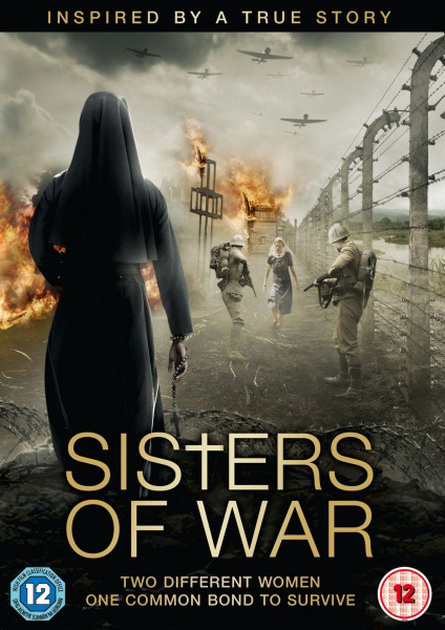
Sisters of War (2010 TV) The True Story of the Australian POW Nurses and Nuns

Sisters of War is an Australian TV movie based on the true story of Lorna Whyte and Berenice Twohill, a nurse and a nun who were held captive for several years by the Japanese during WWII. The film looks a bit “made for TV” but other than that I liked it. There are so many of these forgotten stories and it’s great when a director decides to bring them to our attention.

1942, Vunapope, Papua New Guinea, an Australian hospital camp and mission. Nurses and nuns help the wounded alongside the army doctors. When the troops withdraw, the doctors follow them to help them and, to everyone’s dismay, decide to abandon the nurses, nuns and the wounded. Some of the troops remain hidden in the surrounding forest.

The remaining sisters scan the horizon daily, hoping for the Americans to come to their rescue. When they see boats land they are at first extremely happy until they realize their mistake. The landing troops are Japanese and their mission is soon turned into a prison camp. In this mess and confusion two women, the nurse Lorna whose fiancé is among the troops hidden in the forest and the devoted sister Berenice become close friends and are a moral support for each other.

The months that follow are hard. The American bombard the mission thinking it is Japanese, while the Japanese rule with a fierce hand, punishing everyone who doesn’t comply and torturing and executing all the soldiers they capture. It’s particularly harrowing for Lorna when they capture her fiancé.

The food is scarce and the few buildings they have are constantly bombed. The mission has to be abandoned in the end. Bishop Scharmach decides to send the nurses away. They suspect that they have been sold as “comfort women” to the Japanese. This isn’t true but the plans the Bishop had, to have them exchanged against Japanese prisoners of war, doesn’t work and the nurses are sent to a labour camp in Japan.

I thought the movie was quite well done, not too sentimental and managed to show a forgotten story and is also a testimony to the great strength and courage of those nurses and sisters. As we are told in the closing credits, those nurses, as they were mostly not military nurses, didn’t get any recognition until quite recently.

It’s a nice touch that we see the real Lorna Whyte and Berenice Twohill, now elderly, sit together on a bench and chat at the end of the movie.

I really wonder how this could have happened, that the whole military, especially the doctors, just left those women on their own. They knew so well how the Japanese treated prisoners. At first I thought that the depiction of the Japanese soldiers was overly negative but towards the end, the portrayal is balanced.

The only instances in which you can see that it must have been a low-budget production is the make-up. They all look pretty odd but if you can forgive that, it’s a highly watchable movie, quite tragic but suspenseful and fascinating too.

Behind Enemy Lines (2001)

In my definition a good war movie is a good anti-war movie. If we apply this definition then Behind Enemy Lines is either not a good movie or not a good war movie. Since I personally enjoy it, I would say, it is simply not a war movie but, like Hunt for Red October and similar films, one of the movies that is based on a war premise. Only in my opinion Behind Enemy Lines is far better than its predecessors, the old-school cold war movies. Not sure why I’m so fond of it, but I am. It’s a guilty pleasure, has some great scenes and pictures and a pretty decent score. And I like Gene Hackman far better than Sean Connery.

Superhornet navigator Lt Burnett (Owen Wilson) and his pilot Stackhouse (Gabriel Macht) are on an unauthorized reconnaissance mission over Bosnia in the early 90s. They fly off course in a non-flyover zone and take pictures of a mass grave, hidden by the Serbs. Unfortunately they are spotted by ground troops.

They have been stationed on the USS Carl Vinson for quite a while. Burnett is fed up with the Navy. He feels that they are a long way from WWII where American intervention made sense and that they aren’t doing any good. He wants to leave the Navy as fast as he can. His commanding officer, Admiral Reigart (Gene Hackman), is less than thrilled. He doesn’t share his opinion and doesn’t want to lose a good man. He sends him on this reconnaissance mission to remind him how much he loves to fly and hoping he would make up his mind.

When the Serbs see the plane fly over the zone where the grave is hidden, they track it and shoot it down. Those air scenes are pretty great and one of the strengths of this movie. Pilot and navigator get out alive but since the Serbs know they have taken pictures of something nobody should know about, they are hunted. From now on the movie follows Burnett’s attempt to escape. One suspenseful scene follows the next. While some of them are not very realistic, they are entertaining and suspenseful.

Burnett is left on his own for most of the time as Reigart cannot send a chopper to get him out because this would endanger the peace process and the mission wasn’t authorized by High Command to begin with.

Burnett is tracked down by his enemies more than once and each escape is narrower than the other. My favourite scene is the one in which he has to cross a mine field in order to escape.

Behind Enemy Lines is a total failure as anti-war movie but works extremely well as a war-themed action adventure. The only real flaw is the disappointingly corny ending.