All The King´s Men (1999): The Company That Was Said To Have Been Swallowed by a Cloud

Whatever happened to Sandringham company at Gallipoli in 1915?

Were they really swallowed up by a giant cloud? Was there really a mist so dense that they could have disappeared in it? Did angels lead them to more heavenly grounds? Many tales like these are reported from many a battle field. Angels descending, mists forming, whatever not.

This is a true story. The Sandringham company did disappear. One of the versions that is  told in  All The King´s Men of the vanishing of over a hundred men is quite spooky. It has been for a very long time the preferred version and was definitely the one that the king was meant to believe. I really do not want to spoil this movie for you and will therefore not even hint at the true explanation. It should suffice to say that it was far more tragic than miraculous.

Sandringahm was one of the residences the Royal Family liked to stay at in summer. The 150 men that formed the company were headed by the king´s  Estate Manager Capt. Beck. They were servants, grooms and gardeners. The idyllic setting of Sandringham was referred to as paradise. What a stark contrast to the burning hot plains of Turkey.

The moment the company sets foot on Turkish ground it is obvious what an ill-fated campaign this is. The maps are wrong, the terrain is too hard to handle, the enemy has been totally underestimated. With hindsight historians say that Gallipoli was one of the most futile battles of WWI that was full of senseless battles.

WWI cost over 1 million of British and Commonwealth soldier´s lives. Half of them never got a proper grave. Compared to that the disappearance of some 150 men seems little. But to the estate and the little village who lost all their young men in one moment this was a catastrophe.

The BBC has done a good job with this movie. The actors, in particular David Jason and Maggie Smith, are excellent. The first parts achieve to create a very spooky atmosphere that only vanishes when the true reasons are revealed.

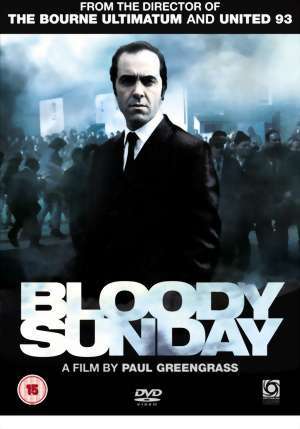
Bloody Sunday (2002) or The Day Innocence Died

Maybe it is debatable whether this is a real war movie in the strict sense of the term (but then, what is that anyway?) but I believe whenever there is armed conflict executed by an army or large group of people, even though not on a global scale we have to speak of war.

On January 30 1972 the British army opened fire on a peaceful Civil Rights March in the city of Londonderry in Northern Ireland. On this day 27 people were shot and 13 of them lost their lives. A further victim died a few months later. This day was from then on called  Bloody Sunday. It was a huge blow to the Civil Rights Movement and ended in countless young men entering the IRA. What followed is a history of bloodshed and terrorism that would not end until the 90´s.

On June 15 2010, after an investigation of 12 years had been conducted and found that the British army had opened fire without  a reason, the British Prime Minister Cameron apologized for this crime.

The so-called Saville Report has cost 230 million Euro. It proved without any doubt  that  the soldiers were at no time shot at. They opened fire on people who tried to flee, take refuge or wanted to help others. Two thirds of the victims were only 17 years old.

When this movie was shot, although largely known, there was no actual evidence as to the truth of these facts. We know them now and thus the movie unfurls vividly before the spectators eyes the whole extent of this tragedy.

Bloody Sunday is not easy to watch and the first two thirds were so annoying that I was tempted to stop it. This is solely due to the technique. It is filmed documentary style with a shaky hand-held camera. We see three complementary points of view. The Civil Rights Movement´s, the Police Headquarter´s and The Army Company´s stationed in the street. The camera fades to black for every scene. During the bits at the Police Headquarters there is a constant ringing of telephones that drove me almost mad. Also at the Civil Rights Movement´s Head Quarters, just before they assemble on the street, phones keep on ringing. The movie basically shows the whole day from early morning until its bloody end. We see the people prepare for the march, the police debating at what point they should stop the march and the soldiers on the street taking position.

It is worthwhile to sit through these annoyances though. The last third, when the march turns into a tragedy, is extremely powerful and the documentary style filming adds to the realism to an almost unbearable extent. What we watch is such a tragedy that we can barely believe it. To shoot at people who shout for help or try to help others looks like an execution.

Saying all this I think the movie shows nevertheless, no matter how misguided the army was or how brutal their reaction, that  they were also under a lot of stress. Some of their own had been killed a few days before, they were constantly attacked, bottles thrown at them.

As so very often it is shown that those on the street (very much like those on the battle field) depend on their command in the Head Quarters who failed them completely. They misjudged everything, thought that sheer force would end it all and boy were they wrong. And, as always, they never pay a price in lives.

At the end of the movie there is a scene when every single victim is named. Every individual anonymous victim seems to become a face.

When watching the end I was surprised at how much this movie got to me.

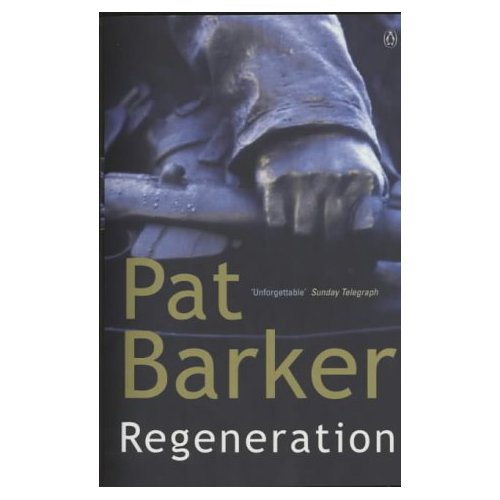
Regeneration aka Behind the Lines (1997) or Psychiatry, Poetry and Shell Shock during WWI

Based on British novelist Pat Barker´s incredible book Regeneration, the first book in her Regeneration trilogy, this movie has an awful lot to offer. Unfortunately like some other brilliant war movies (e.g. When Trumpets Fade) it never got its due appreciation by the public. This is a bit sad since everybody included in this film, especially the actors, did a brilliant job. Jonathan Pryce´s way of playing the eminent Dr. Rivers in such an understated manner impressed me a lot.

Set in WWI England and the French trenches Regeneration looks into so much more than  just into it´s central theme shell shock. Class and duty, courage and a sense of utter futility coming from the colossal losses of lives are some of many themes.

Another interesting aspect is that Regeneration also looks at the birth of a medical discipline namely psychiatry in its struggle to become a well-respected way to cure people. During the times depicted in the movie however its sole purpose was to restore the ill young men and make them fit to be sent back to the trenches.

A further central theme is the poetry of young poets such as Siegfrid Sassoon and  Wilfred Owen. The people we encounter at the heart of this movie are mostly intellectuals.

The story circles around the poet Sassoon (James Wilby) who is considered to be a war hero. He has written a letter of protest against this war that is still going on despite all better understanding. To avoid court-martial he is sent to the asylum to be treated for shell shock. He does have recurring nightmares but apart from that he seems unharmed.

As mentioned before we also find a thematization of the topic of class. The officers were mostly from the leading upper class. One patient however made it to a higher rank without the usually required background. One more  look from another angle at this complex mess of a war.

There are many other patients in the asylum that have been marked more deeply than Sassoon. Some stammer, some lost their speech altogether, others suffer from hallucinations, delusions or other forms of psychotic reactions. One of them, Billy Prior (Johnny Lee Miller), is a very interesting character, so is Wilfred Owen (Stuart Bunce), the young poet.

Dr. Rivers (Jonathan Pryce) who is also a leading anthropologist is a very gentle psychiatrist (We learn more about him in the novels. The sequels to Regeneration, The Eye in the Door and The Ghost Road elaborate these aspects. Being an anthropologist myself I would have liked to see sequels of those movies. As an avid reader it is rare I am truly impressed by books but I was when reading this trilogy. Unbelievably good.). He tries to heal by listening to his patients and help them regain their memory of often unspeakable horrors. Empathy and compassion are Rivers´ trademarks. He cares deeply for his patients and it is tragic when he  ultimately realises that all he does is cure them to send them off to face a certain death.

During the movie we are also shown one other doctor´s techniques at curing mutism originating in shell shock. They are revolting to say the least.

What made this movie so remarkable  is the way it chose to show the scenes in the trenches. Even tough it is a color movie, the use  of color during the trench scenes is attenuated, creating almost black and white sequences. This is convincingly artful. The just middle between the black and white of All Quiet on the Western Front and the corny choice of color in Passchendaele.

Regeneration is one of the best war movies on WWI. It excells in showing the absurdity of war, friendship among men, the birth of a discipline, the power of poetry to convey even the most horrible adequately. Yes, it is a rich movie. Would I want to do it justice, this already long post would be at least three times  longer. Putting  my review in two words: Watch it!

Should you be interested in more background information you should read a first hand account of one the people shown in the movie.  Why not read Robert Graves´ (played by Dougray Scott) autobiography Goodbye to All That?  Graves was Sassoon´s closest friend and responsible for his escaping court-martial. Of course Paul Fussell´s book  The Great War and Modern Memory does also take a closer look at the above mentioned poets. This is dense however not less recommended reading.

Regeneration at amazon.com, amazon.co.uk ,amazon.de

Everyman´s War (2009) is retelling The Battle of the Bulge

I don´t really know what to say about this movie. Basically I think it is a missed chance. It contains too many flaws to be really good but still has quite a few touching moments. One would like to grab the filmmaker and give him a good shaking because it would not have needed much to be satisfying.

Everyman´s War is based on the story of Thad Smith´s, the film director´s father. Sgt. Don Smith was part of the 94th Infantry Division fighting for Nennig, a small town in Germany during the Battle of the Bulge. The Battle of the Bulge was one of those notorious big battles that had to show up with an enormous cost in lives. Being one of the decisive battles, the last big Nazi offensive, it overshadows other battles like the one at Hurtgen Forest that was so skillfully depicted in When Trumpets Fade. The battle of  Bastogne Forest that we saw in Band of Brothers is also part of the Battle of the Bulge. Smith lands in Europe around Christmas 1944, just when the offensive begins and stays in Europe until the end of the war.

The tragedy of the battle is well shown in Everyman´s War. The Army command misjudging the German´s will to fight thought they would never attack during ice-cold weather, snow and temperatures below zero. But they did.

Sgt. Smith´s courageous fight, the love for his comrades and his despair about losing them is well shown. So are the battle scenes. As long as there is no music all is fine. Sadly the choice of music is bad and ostentatiously corny. And so is the background story, the home front bits  (think the end of Saving Private Ryan and dip it in sirup).

This is frustrating as the main theme, alluded to in the title, is nicely executed. This was everyman´s war. Everybody was in it. The French, the English, the Americans, but also the Germans and the German Jews. Moments where the film achieves to make us feel sorry for everyman involved are truly good.

One last word on the use of language that will only annoy people who understand German. 90% of the actors impersonating German´s are not Germans and have bad accents and an unintentionally funny way of pronouncing the German words. However this will not bother speakers of other languages. Apart from that the portrait of Germans is quite just.

Having said all this I just think it is a pity. This could have been a good film but now we are left with a 3 (out of 5) star achievement.

Escape from Huang Shi aka The Children of Huang Shi (2008)

Believe it or not but Escape from Huang Shi is an Australian, Chinese, German co-production telling the true story of a British journalist. What a combination. This gives the movie a very authentic feel, especially due to the fact that we hear as much Chinese as English (and some Japanese).

If anyone has liked the movie Crouching Tiger, Hidden Dragon as much as I did (I think it is one of the best movies ever. One could almost call it a martial-arts fairytale), he or she will be pleased to see Michelle Yeoh and  Yun-Fat Chow in the same movie (however no joint scenes).

But this is not the only pleasant surprise of this quite enjoyable movie.

The story is similar to Welcome to Sarajevo, only this journalist here, played by Jonathan Rhys Meyers (who is really good in this), is doing something even more courageous. He stays in the country to help the orphans.

It is absolutely incredible what some people are capable of doing even when facing adversity at its worst. This is a story of someone who was capable of overcoming his own fear, of reinventing a life for himself and a group of orphan boys and creating a home for them.

George Hogg, a young British journalist, arrives in China in 1937 finding the country being invaded by the Japanese. Air raids, floods of refugees on the streets, he´s afraid and thrilled at the same time hoping for the story of his life. He gets it only not the way he had hoped for. He soon sees himself in great danger and is led by an Australian nurse to Huang Shi. She leaves him there to struggle with famine, the depressions and aggressions of some 60 orphaned boys who have seen the worst and the insecurity of a life on the border of a war.

In wonderful pictures we see him overcome the urge to escape and help those children transform the barren land around them into a fertile garden. He is assisted in this  by a mysterious tradeswoman Madam Wang (Michelle Yeoh) who sells more than just seeds, by Chen (Yun-Fat Chow) the leader of a communist partisan group and of course the Australian nurse (Radha Mitchell) he is secretly in love with.

When the Japanese and the air raids start to approach Huang Shi, Hogg must make a decision. He wants to flee and take the children on a journey over 500 perilous miles across the snow-bound Liu Pan Shan mountains to safety on the edge of the Mongolian desert. This seems almost impossible to achieve.

The movie reminded me a little bit of  The Painted Veil (no, it is not a war movie). Same beautifully filmed landscapes. And those sumptuous  and, for us exotic, Chinese interiors of the time. The story is already quite captivating but the beauty of those landscapes alone would have been enough to enchant us.