Is Passchendaele (2008) the new Pearl Harbor (2001)?

“The British couldn´t do it, the French couldn´t do it. It´s  only us, the Canadian corps” (quote from the movie).

I was  tempted to write: “Once we had Pearl Harbor now we have Passchendaele” and leave it at that. But that won´t do. I´m afraid I must say, that this would have been an easy escape in terms of criticism for Passchendaele. And extremely unfair to Pearl Harbor. This coming from someone who thinks that Pearl Harbor does not even deserve the label “war movie”.

The story in a few words: As the war went on Canadians were getting more and more involved. Being only a little nation at the time, the participation of 600000 was enormous. 1 out of 10 did not come back. At Passchendaele alone 4 000 Canadians died and 12 000 were wounded. This unspeakable tragedy is meant to be shown. To illustrate this we see the exemplary story of one Sgt. who comes back after having fought at Ypern, on Vimy ridge etc. He’s a decorated war hero but shell-shocked. He has done something unspeakable and cannot forgive himself (apparently this bit is taken from Paul Gross´grandfather´s story of his participation in WWI). He is really bad off and won´t have to return. But, as some sort of love sacrifice (not going into details here I leave all the enjoyment of watching this movie and discover a piece of subtle sophisticated filmmaking to you. YES… I´m being sarcastic.), he goes back and ends up fighting at Passchendaele. This is one of the biggest and most notorious battles off WWI. Initially a success for the Canadians and their allies, in the end a failure due to the fact that a few months later Passchendaele was lost again to the Germans.

Watching Passchendaele I was feeling extremely stupid. Why did it escape my attention that this was again a hero + nurse + absurd conflict romance disguised as war movie? Unfortunately the romance part is nowhere near as good as the one from Pearl Harbor (Yes, I think Pearl Harbor is a very entertaining romance, well done). And the war parts? They are odd to say the least. We do see quite a bit of fighting. Between town ruins and in moors and muddy trenches. The odd bits reminded me of  Windtalkers (so watch out all you who liked Windtalkers). Many explosions, one unconvincing “in the trench of the enemy scene” plus, this was quite original, people keep on flying like puppets. Oh and… I almost forgot this…the way the Canadians are depicted is priceless. What a jolly crowd. Jolly, jolly, jolly. They never stop laughing not even when they are torn apart or their comrades come flying over their heads. Why? What in the name of everything does this mean? One last word: the conversations are among the worst ever heard. In the trench Sgt Dunne actually says to his lover´s young brother, explaining the war : “Forests burn cos they have to, oceans go up and down cos they have to…and I don´t think we are that different…(…) this is something we do cos we are good at it…” Forests burn cos they have to, eh? The inherent nature of the forest is to burn? Very deep. Abysmal.

You know what? Even though many Canadians appreciated this movie (probably purely because at last their heroic participation was brought to our awareness. NO. I´m not being sarcastic now.). … I think they would have deserved better. To be really blunt: I think this movie is shit.

Be it as it may, there is one good bit related to the death of the nurse´s father – no I won´t tell what it is – and I am sure: this movie has and will have its fans.

If I had watched the trailer before buying the DVD I would at least have known about the romance bit. Can´t judge a film by its cover, can we ? (Liked this one too much for my own good).

The Pacific versus Band of Brothers: Should we compare?

I finally got to watch the last episode of The Pacific. Even though I had an entry on it a while back I didn´t feel like writing about it before I had seen the whole series. It proved to be  a good decision since I couldn´t really appreciate it at first. I couldn´t help myself, like so many others, and compare it constantly to Band of Brothers. Apart from being a HBO miniseries produced by Spielberg and Tom Hanks, opening with men who were there talking about their experiences, those two series have nothing in common. Sure they both show a lot of very intense and gruesome infantry combat scenes but that is that.

Band of Brothers, as the title eloquently indicates, was about a close-knit group of men, one Army Infantry Company. This is not the case in The Pacific. The Pacific focuses on three main characters, the three marines Sgt. John Basilone, PFC Robert Leckie and Eugene B. Sledge. The last two wrote books about their experiences. The first episodes focus on Leckie, whereas the last ones tell Eugene aka Sledgehammer´s story. This last detail is based on the fact that Eugene went to war much later than the others. He missed Guadalcanal and Cape Gloucester, one main battle and one major experience of the war in the Pacific.

The mini series shows a lot of off the battle ground episodes. Soldiers on leave in Australia, Leckie´s stay at different hospitals and later we see Sledge back home. Many of this off the battleground parts look at the symptoms of post-traumatic stress of which both Leckie (in a very physical way-peeing himself-) and Sledge (more psychological-he´s depressed and has endless nightmares) suffer intensely.

The series has  many crucial moments. Truly gory battle scenes.  Endless rain on Cape Gloucester that grinds down the morale. The realization that all they learn is “killing Japs”.

There is one key scene, the moment when the two friends Sidney and Sledge meet as one leaves and the other arrives in the Pacific. Sledge wants to know from Sidney how it is to be fighting but he doesn´t get an answer. This is actually a recurring theme in war movies (there is a scene like that in The Deer Hunter and in many others): the inability of those who have experienced it to tell those who are about to experience it what it is like to be in combat. Or maybe it is not so much an inability as a refusal. They have been there, they know it´s no use. You cannot talk about something that is so completely different from anything you imagine. No one who hasn´t been there will ever know what it is like and there are no words to really convey this, nothing that equals the experience. All you have got in the face of the innocent and ignorant is silence. The Pacific shows this very well.

I would like  to point out specifically one further scene. It is related to one of my major points of interest namely Death. In The Pacific we see one of the most touching deaths in the history of war movies. I don´t want to spoil anything so I´m not going to tell you who is dying. What makes this scene so different is the way it is shown. We do not see the actual dying, we hear that the person died and then the corpse is being carried  by some soldiers and transported through the lines of men standing there paying tribute and crying. This is a genuinely heartfelt and sad moment. A display of utter futility.

Something else is very different from Band of Brothers. Even though it was WWII, this wasn´t the same war. This is not about a bunch of soldiers freeing occupied countries and captives. We have no rewarding moments like the one in Band of Brothers when they liberate people in a concentration camp. The war in the Pacific seems much more futile at moments. And senseless. And it lasted longer. The war in Europe was already over, Germany had surrendered but Japan had not. Only after Little Boy and Fat Man did this war stop. This must have been some sort of an anticlimax. By the time those soldiers came home, the whole world had already been celebrating the end of the war. The party was over and they had missed it.

Needless to say that this influences the tone of the movie.

For all these reasons I do not think it is doing The Pacific any justice to compare it to its older brother.  It really has its moments this series.

One last thing needs mentioning though and it is something I did not enjoy much. The Japanese are never ever shown in a positive light. You truly get the impression that they were a bunch of murderous automatons. If anyone wants to see a more honest depiction I suggest you watch Tora Tora Tora (1970) or Letters from Iwo Jima (2006). They both try to and  succeed in doing the Japanese justice.

amazon.com

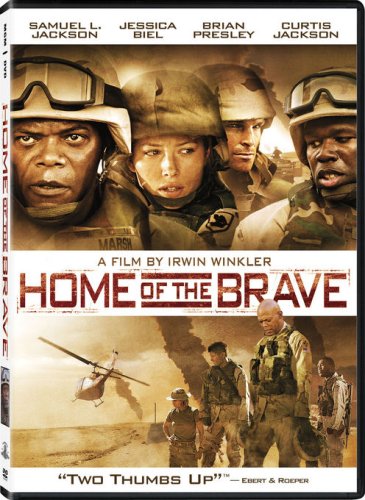
Home of the Brave (2006) or When a movie really fails

Home of the Brave is about a group of soldiers who came under heavy attack shortly before being sent home. After their return they try to cope with what they have been through. They all fail to some extent before they realise they need psychological help.

What a bad, bad, bad movie! I´m embarrassed I watched it. Worst acting ever. Ridiculous dialogue, dragging storyline, wrong cast, pathetic music…

And yet, there are a lot of people who like this movie and say: that´s exactly how it was.

I don´t doubt for one sec, that this is how it was. I don´t doubt for one sec that the returning soldiers need medication, treatment, can´t make their relatives understand, despair, start to drink, get violent, blame everyone including themselves and the government.

Fine. But DO NOT show a message like this in such a way. After a while you start to wonder, why there is not a constant voice in the off telling you: ha…that was impressive, ha…see how horrible, ha….start to blame the government and now ha….

This doesn´t work. It´s like someone telling you a joke and immediately explaining you afterwards why it was funny.

The opening is quite similar to many other opening scenes of movies located in Iraq, be it Battle for Haditha, Stop-Loss or any other. But the similarity is a purely exterior one. The acting is too bad to actually induce feeling. The convoy gets ambushed, people die and get mutilated. And all this happens after we have been told that exactly these people are about to go back home. This is repeated so many times that the thickest moviegoer starts to scratch his head thinking: Are they telling me something here? Fate playing tricks is an old theme in war movies, after all it´s one of life´s themes, but usually it is handled with more subtlety.

Next thing, they are all back home. One has lost his best friend, one (a doctor) had to amputate many limbs, one had her hand amputated and now they start to struggle and stumble and fail like the movie.

Sad. They meant well. They wanted to tell us: This should not happen. America shouldn´t meddle. This is not WWII. We won´t get statues and memorials and see people with tears in their eyes still thanking us years later. No, they hate us, they want us out and if we don´t get it, they shoot us up.

A few final words on the actors.

Jessica Biel: Very bad start but then okish.

Samuel L. Jackson: He can’t really be very bad, can he? No, unless he unconvincingly tries to play a drunk. But he has his moments still.

Brian Presley: Who´s that geek? He´d be good in a movie like My Beautiful Laundrette. But only for the looks. Talentwise it´s rather… well…any bad series. Whatever.

Chad Michael Murray: How to get shot and look ridiculous at it. He should keep on making series like  One Tree Hill (not that I´d watch that) or movies like Cinderella Story.

50Cent:  Mumble, mumble, mumble or How do I act without having the tiniest facial muscle move.

Christina Ricci: What the heck were you thinking accepting this role?

The only good thing was the movie´s attempt at showing that medication is no solution to trauma and consequential sleeplessness. It´s in the end no better than drinking. You can´t ignore the trauma, you can´t block it, you have to accept it and  talk about it.