Rescue Dawn (2006) or One Man´s Ordeal in a Vietcong Prison Camp

Dieter Dengler, a young American fighter pilot of German origins, is shot down over Laos, in 1965, just when the Vietnam war is about to start. Naïve and enthusiastic he doesn’t think that much harm could come his way but when he is captured by Vietcong he learns otherwise. Thanks to his astonishing resourcefulness, his unabashed optimism and his sense for camaraderie he survives the worst imaginable circumstances. He endures torture, hunger, pain and humiliations by sadistic guards, petty accusations and nagging by fellow prisoners. He carefully plans their escape and finally succeeds, only to find his ordeal is not over.

Werner Herzog is known for movies that often have lush jungle vegetation as a backdrop. No difference here. The same cinematographic language that I knew from movies like Aguirre, Fitzcarraldo, Cobra Verde and Grizzly Man that have made Herzog famous. The beauty of the forest, the plants and giant insects are captured here as well, but  then the comparison to other movies stops. Rescue Dawn was one of the most revolting films I have ever seen. Probably it is shockingly true to the events that Dieter Dengler had to endure, nevertheless I found it hard to watch. Seeing people eat handfuls of larvae and maggots was not my cup of tea. Sure it is well done and all but yuk, yuk, yuk.

Apart from being disgusted I am also awed. It´s incredible what some people can endure and how they manage to survive the worst.

Christian Bale is very good although  he acts quite badly at the beginning. Steve Zahn and Jeremy Davis are outstanding.

Required viewing for Werner Herzog fans, POW movie fans and every one like me mad enough to think they have to see every decent war movie no matter what´s at stake for the stomach nerves.
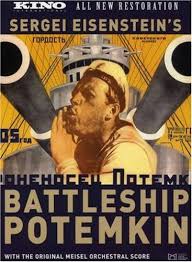

Sergei Eisenstein’s Battleship Potemkin aka Bronenosets Potyomkin (1925): A Painful Movie Experience

Eisenstein’s Battleship Potemkin is one of the great cinema classics and the first time a movie was dedicated to a Revolutionary act. It tells the story of a mutiny that took place in 1905 and was followed by a street massacre. The crew of the Battleship rebelled against their officers.

Some of the scenes, like the one posted below, dubbed “Odessa Steps”, have written film history.

Be it as it may, I suffered all through the viewing of this film. I found it agonizingly boring. Maybe I am just not a silent movie person although I seem to remember I have seen a few that I liked.

Still, I quite like the Odessa steps scene but the parts on the ship with the long takes on machines and guns are excruciating.

We have to bear in mind that this movie is also an eloquent piece of propaganda.

Arn: Knight Templar aka Arn: Tempelriddaren (2007) or A Fantastic Movie about the Crusades

What a fantastic movie. A lavish historical epic with likable characters and a great story. So much better than Kingdom of Heaven although that is not a bad movie at all. Only, I did not care much about the characters and the story. Big difference here. Arn: Knight Templar makes you care. You want to know what happens, you feel outrage when the main characters suffer wrong and you admire them and enjoy watching them.

Based on the novels by Jan Guillou this multinational co-production (we hear at least 5 different languages: Swedish, English, French, Arabic and Latin) centers on Arn, the son of a Swedish noble man. He falls in love with Cecilia, who is promised to another man. When their love is found out they are sentenced. Cecilia is to spend her days in a convent, Arn must join the Knight Templars and travel to the Holy Land. He will experience the brutality of the Crusades but still remain true to himself and stay just, courageous and open-minded. Cecilia on her side endures many hardships. The worst is certainly that they take away her newborn son, as he has been conceived in sin.

We see many a battle scene, breathtaking landscapes (the movie was filmed in Sweden, Scotland and Morocco) and we wonder once more how people can fight bloody battles in the name of religion.

Even though a major part of it,  the battles, the fights and the beauty of the scenery are not the the only good aspects of the movie. The depiction of the Middle Ages, centering on a bloodthirsty Catholicism,  is what makes this movie memorable. How horrible the Catholicism of those times has been, with its belief in sin and eternal damnation, its attempt to spread the faith all over this world, and even in bringing warfare to every corner of the earth. And the way they treated women and people of other faiths… Abominable.

Last but not least this is also a beautiful love story.

The cast is quite interesting. We see, once more, Stellan Skarsgard, but also Vincent Perez, Milind Soman, Bibi Andersson (she gives a chilling performance as a frankly sadistic nun), Sofia Helin and, starring as Arn, Joakim Nätterqvist.

I have a seen the shorter version. There are apparently two. I believe the longer one is better. A word of caution: there is some weird jumping in the time going on. This needs some getting used to. Maybe it is due to the cuts.

Be it as it may, watch it as soon as you can. You won´t regret it.

The Guns of Navarone (1961): A Great War Adventure Movie

Some movies age well. Others don´t. The Guns of Navarone,  a splendid UK/US co-production, is one of the first kind. Almost 50 years old but still fresh like on the day it came out. This is thanks to a  lot of things. A gripping story, a great cast (Gregory Peck, David Niven, Anthony Quinn, Irene Papas, Stanley Baker, Anthony Quayle), wonderful cinematography, a nice score. What more do you want from a good war adventure yarn? I hadn’t  seen it before (yes, yes, shame on me) and was really surprised how good it is. And very esthetic. It is one of the most esthetic movies I have ever seen.

The year is 1943. Greece is occupied by Germany.  The Germans who feel they are losing on the Eastern Front try to force Turkey to join them. The Guns of Navarone tells us how a group of men tries to secretly enter a Greek island, meet with the Greek resistance and with their help sneak into a fortress to destroy two powerful German guns that threaten British soldiers who are marooned on another island. The mission is extremely dangerous and no one actually thinks they might accomplish it.

The story, from the beginning to the end, is one gripping sequence after the other. Each one of them could almost stand alone like some sort of short story. First they fight the elements on a boat during a storm. Then they have to climb an impossibly steep rock. Every place they find themselves in is swarming with Germans so they have to hide often.  In one episode one of them gets wounded and they need to decide if they take him along or shoot him. One of them betrays them and they need to decide whether or not to shoot the person. They get captured by the Germans but escape. Many things go wrong and not all of them make it. The best scenes for me are in the fortress. We hear a German song in the background and see this bunker with its typical Nazi esthetics.

It is also a funny movie at times as the German´s really get their asses kicked. In one scene the group is hiding and a German guard hears them. To distract  him they throw something and he runs off like a dog.

There is also some humorous dialogue mostly coming from the stiff-upperlipped British major played by David Niven.

The characters are well drawn, interesting and complex. Major Mallory (Peck) is a mountaineer whose expertise is needed for the mission. Miller (Niven) is an expert in explosives. Stanley Barker plays a trained killer who has problems with his conscience. I was quite surprised to see Irene Papas, the Greek singer, in one of the roles. I didn’t even know she acted. She plays a Greek resistance fighter. Quite a fierce character. Gia Scala´s role Anna is interesting and what happened to her illustrates once more the idea of the absurdity of war.

This movie made me quite nostalgic. You don’t find many movies like this anymore. And no actors like these either.

Je veux voir aka I want to see (2008) or Lebanon after the War in 2006

Je veux voir is something in between a documentary and a movie. The idea for the film  came from the helplessness of the filmmakers to see how parts of their country were destroyed in a war that lasted only 1 month. They wanted to have a look at the destruction. They wanted to see for themselves and let others see. To do so, they decided to have the icon of French cinema, Catherine Deneuve, and a famous Lebanese actor, Rabih Mroué,  visit Beirut and the South of Lebanon together.

Seeing those two strangers together in a car is quite awkward at first. He is afraid of what he will see. Rabih spent his childhood in the South where his grandmother lived. Now everything is destroyed but not all the destruction they see is new. A lot is still from the civil war. The Lebanese had never really had the time to fully rebuild their houses.

It is quite surreal at moments to see a woman like Catherine Deneuve in these places. They have odd conversations about putting on a seat belt or not, which is not important to Rabih. Not anymore, as he says. Since the war such details have lost their importance.

During their trip Rabih often repeats things Catherine says or once said in a movie in Arabic.

They have to be careful as there are cluster bombs everywhere and once they stray from the path, everybody is in uproar.

At one moment Israeli jets pass over their heads and Catherine Deneuve nearly freaks out. She thinks they are under attack. But no, as Rabih explains, this is a common procedure. Israeli jets often break the sound barrier to induce fear. But they also take pictures.

Frankly, as short as it is, I found it boring at times and Catherine Deneuve´s lack of comprehension was a bit exasperating.

But the end was good and I was glad I watched it.

We see mountains of rubble. Huge, huge mountains of rubble. All the leftovers of the destroyed buildings have been brought to a place near the sea, where they are further destroyed and the rubble is shoved into the see. What struck me were all this steel bits and wires looking out of those heaps like tentacles. You only see as much steel when concrete buildings have been destroyed. This clearly indicated that those buildings were not very old. And when I saw this I remembered that Beirut was once called the Paris of the Middle East because it was so elegant and stylish…

Those days are long gone.

Still the film ends on a positive note. The two strangers have become friends and the oh so impassive actress smiles one of her rare smiles when she sees Rabih again in the evening at a gala.