Stalingrad or Dogs Do Yo Want To Live Forever? – Hunde wollt ihr ewig leben (1958) The first Stalingrad

Dogs Do You Want to Live Forever? – Hunde wollt ihr ewig leben? is a German black and white movie from the 50s. Although the newer movie Stalingrad is generally seen as a remake I cannot agree with this view. Both movies focus on Stalingrad but the way they are told, the point of view is very different. While a modern movie will often appeal more to us because it’s not black and white, we know the actors and the special effects are normally superior, this first Stalingrad is an excellent movie and I would say as good as the one from 1993, if not in parts better.

The movie opens with Hitler watching a German army parade. A voice in the off which we will hear all through the movie, criticizing the decisions of Hitler and the high command, tells us that these marching soldiers will soon be dying in the Russian snow. After a while we leave the parading soldiers and the camera shows men dying in the snow. After that the story as such begins.

The movie tells of the encirclement of the 6th Army in Stalingrad from the point of view of a young, idealistic and likable first lieutenant. In 1942, just before the Russian offensive which will encircle the 6th Army, Wisse has been commandeered to an outpost, not far from Stalingrad where he is liaising with a Rumanian corps which fights along with the Germans.

When it is clear that the Russians have started the offensive, Wisse is posted in Stalingrad. The town is half-destroyed, the German soldiers are freezing as they are not equipped for the Russian winter and there is hardly any food left. In the end high command gives the order to stop feeding the wounded.

It is obvious from the beginning of the movie that Hitler miscalculated the whole campaign and that the only way the 6th Army could have been saved would have been to break out of the circle and retreat as fast as possible. The Russian army entrapped a Germany army which was lacking winter gear, ammunition and was almost starving. The generals and commanding officers pleaded with the Führer but he was adamant. Still, the German command refused to break rank and disobey Hitler to save the army.  By the time General Paulus decided to surrender, 60’000 soldiers were dead. 110’000 were left, of which only 6’000 would return to Germany after the war.

What is particularly harrowing in this dark chapter is the fact that Stalingrad had no strategic importance whatsoever. It was a purely political decision and for the same reasons Stalin decided to hold the city. What followed was probably the most infamous battle of WWII.

There are many reasons which make Dogs Do You Want to Live Forever? a great movie. In focussing on one man, first lieutenant Wisse, it exemplifies the disintegration of the whole army and illustrates the disillusionment and the realization of Hitler’s misguided megalomania. While Wisse is true to the party in the beginning, he, like all the other soldiers based in Stalingrad, becomes aware that Hitler doesn’t care what happens to them. He breaks his promises and as soon as he realizes the fight might be lost, he abandons them completely.

Wisse isn’t the only interesting character, there is the cowardly  commanding officer Linkman, the priest who speaks up and fight for justice and some secondary characters which are all well-rounded too.

While Stalingrad (1993) is a great movie, this one feels even more authentic because a lot of what we see is original footage and it’s blended in so well that we often only realize that we are back to the movie when we can make out one of the actors. I have rarely seen this type of blending done so seamlessly and well. The effect is not only realistic but chilling.

What was better in this one than in the new movie was the way the street fighting and the combat in the city was shown. That must have been so chaotic and both sides were battle weary and would have liked to stop fighting.

Stalingrad – Dogs Do You Want to Live Forever? is one of the top war movies, one nobody should miss. It’s well worth pairing the viewing with the 1993 version as they complement each other.

While finishing this post I discovered that there will be a new, Russian Stalingrad which should be released in 2013. Directed by Fedor Bondarchuk, starring August Diehl. I’m really looking forward to that.

http://www.youtube.com/watch?v=1kJ9Dtxpf-8

Triage (2009)

“It’s complicated to be a survivor. Sometimes you have to place your faith in magic.”

Triage is a movie by Danis Tanovic, the director of No Man’s Land, another really great war movie. It is based on the eponymous novel by Scott Anderson.

What happened to Mark (Colin Farrell) in Kurdistan? He and his best friend David, both war photojournalist who have covered many wars, have flown to Kurdistan together in 1988. They want to cover an offensive that will take place in a few weeks. While they are there, they stay at a forlorn mountain clinic and watch how the doctor (Branko Djuric), at the end of his wits, with nothing else to do for the badly wounded, shoots them one by one. This affects Mark deeply. Later when he is back home he will still see the pictures of the tiny colored slips the doctors puts on the men. The color indicates how far gone they are and if he will have to shoot them or not. It’s part of the triage.

David’s wife is pregnant. The baby is due any day and he would like to go back. But Mark never wants to stop. There is always something more to cover, other shots to take. They quarrel and David finally decides to leave Mark and return on his own.

This is told in flash backs and it isn’t how the movie begins, the movie begins with a badly wounded Mark slowly regaining consciousness. He is at the mountain clinic. They found him near a river. He has no clue what happened to him. After he has recovered he returns home and finds out that David has still not arrived.

Mark’s wife Elena (Paz Vega) is quite shocked to see him in such bad shape and covered in wounds. Plus he is limping and the limp gets worse until he collapses one day. He is brought to a hospital and they find a piece of shrapnel in his head. Only that has nothing to do with the limp. Elena begs her grandfather, a Spanish psychologist, to come and help David. Together, they will reveal, bit by bit, what has happened to Mark and why David isn’t home yet.

I liked this movie a lot. I found the cast very interesting. Colin Farrell is astonishingly good in the role of a traumatized man who is afraid to find out the truth. Paz Vega in the role of his Spanish wife is very well chosen too but the most astonishing part is played by Christopher Lee as Elena’s grandfather. A really great role.

The movie has a lot to say about photojournalists who cover wars. The way, they always maintain a certain distance with the help of the camera. That’s a reason, the movie argues, why so many get shot. They simply forget that there really is a war going on around them.

The movie also shows nicely how a trauma can bring on amnesia and trigger symptoms like paralysis. It was very suspenseful and fascinating to see how the truth was uncovered.

Among the many good movies on war and journalism, this is one of the best, one of the most thought-provoking. Fans of Colin Farrell will watch it because of him, those who doubt he is a good actor, may end up being convinced of the contrary.

The Dam Busters (1955)

The British classic The Dam Busters is and will always be one of my very favourite movies. It shows eloquently that the best stories are often those which are true. It’s the story of two men and a mission which was as ingenious as it was heroic. One of these men was inventor Barnes Wallis (Michael Redgrave), the other one Wing Commander Guy Gibson (Richard Todd). The movie is based on two books, Paul Brickhill’s The Dam Busters and Wing Commander Guy Gibson’s Enemy Coast Ahead.

The movie has a two-part structure. In the first we see how Willis invents the revolutionary bouncing bomb. The idea was to use the bombs and blow up the Ruhr dams in Germany. The destruction of the dams would not only  flood a huge area  but disrupt the German wartime industrial production as two big hydroelectric plants would go off-line. In order to blow up a dam the bomb had to land exactly on target which was only possible with extreme precision. The planes had to fly very low and used a cunning device to make sure they were at the right altitude and distance when dropping the bombs.

While Wing Commander Gibson was training the 617 Squadron – a special squadron of Lancaster planes – to fly at night at extremely low altitude, Willis was still conducting one trial after the other until he got the right bomb. Once he had the bomb and the date had arrived, it was in the hands of the pilots to make it work. This second part is extremely suspenseful. Of the 19 planes who flew on this mission only 11 returned. After the mission was accomplished, Willis said to Gibson that if he had known the cost, he wouldn’t have devised the bomb but Gibson assured him that each and every one of the dead pilots would have flown anyway.

The story of The Dam Busters is so amazing because there was such a lot of adversity. If it hadn’t been for Willis believing until the last moment that it would work and for Gibson and his men who thought the unthinkable was feasible, it wouldn’t have happened. It’s really amazing watching them, each on their side, adjusting, inventing and probing until they got it right.

Most of you may know that the remake of The Dam Busters should soon be out. This is one of the remakes I find almost sacrilegious. The movie has no great special effects but it tells a great story and the two main actors are very good. Eric Coates music is very famous and still considered to be one of the best war movie scores.

I’m sure the special effects of the remake will be better but I’m afraid it will be a very slick movie, lacking the warmth and enthusiasm that came across in the first. We will see.

http://www.youtube.com/watch?v=xMiQScwL9oU

The Most Terrible Weather Conditions in Infantry Combat Movies – 4 Examples

Combat is hell. We all know that. But some combat situations are made even worse because of the weather. I have seen four movies and episodes of series in which the depicted weather conditions made me think: “How utterly awful this must have been”. The terrible weather conditions are a great means for film directors to enhance how horrible combat is and how utterly futile some battles when facing not only a strong(er) opponent but the force of nature.

The first movie is Stalingrad. To watch those troops in the icy cold snow of the Eastern Front is harrowing. Countless men who survived the battle died from hunger and cold.

Horror weather example number two is also due to snow and cold. It is shown in the episode “Bastogne” from Band of Brothers.

As brutal as the winter in Europe and the Eastern Front was, the constant rain the troops had to face in The Pacific was no less demoralizing. Example number three is the episode number 4 “Cape Gloucester” from The Pacific which takes place just after the battle of Guadalcanal. Humidity and the constant noise of the torrential rain lead to stress and illness.

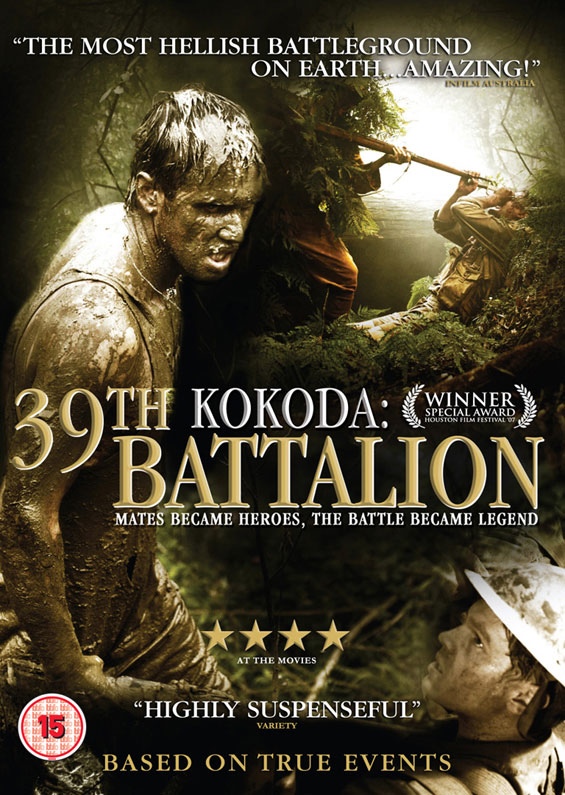
Another really harrowing example was shown in the Australian movie Kokoda. The mud, rain and dirt of the Kokoda trail has to be mentioned among the worst experiences any troops have undergone.

I just realized that all these are examples from WWII. Makes it look as if there hadn’t been any terrible weather conditions during other wars but that is of course not the case. I remember a few WWI movies in which the mud and rain played an important role but I’m not able to pick a perfect example. Additionally I would like to add an example in which scorching heat proved to be fatal.

Which is the worst weather you have ever seen in any war movie?

http://www.youtube.com/watch?v=E6_DKFPZxdQ

The Round Up – La Rafle (2010) – Operation Spring Breeze or The Round Up of Vel d’Hiv

The French/German/Hungarian co-production, The Round Up – La Rafle, is a powerful and intense movie based on true facts. In the nights of July 16 and 17 13000 Parisian Jews were arrested in a raid in Paris and confined in the Vel d’Hiv (Winter Velodrome) or Drancy internment camp and from there to the extermination camps in Poland. Of the 13000 arrested Jews only 25 survived. Many among them, at least 4000, were children. Not one of them survived. The aim was to round-up 25000 Jews but 10000 escaped and were hidden by the people of Paris. The most shameful part was played by the police who actively contributed to make this happen. French President Jacques Chirac apologized in 1995 for the complicit role that French policemen and civil servants served in the raid.

The movie begins with original black and white footage. We hear Edith Piaf sing “Paris” while we follow Hitler on his tour through the city. That sent shivers down my spine. To think that if the Germans had won the war, Hitler would have made Paris his capital. In the pictures he looked like a guy inspecting real estate, deciding on what walls to knock down, what to keep. Horrifying. Here is an account of Hitler’s tour, written by his pet architect Speer.

After the opening we see people in a Parisian street located in Montmartre. The street scenes show that French and foreign Jews amicably lived together with non-Jewish Parisians. Many French people are friendly towards the Jewish population, but others are openly hostile and hate them. The movie focusses at first on a few Jewish families. It shows how secure they felt. They didn’t think the French government would ever give in. But it did. In exchange for privileges it promised to round-up the Jews and deport them eventually.

After the round-up we see the scenes in the Vel d’Hiv and the point of view changes. A young French nurse, Annette Monnod (Mélanie Laurent), has been sent to help alongside a Jewish doctor (Jean Reno). The doctor and a handful of French nurses are the only health care professionals for 13000 people. There is almost no food, no water, no toilets and the hygiene is abominable. Many of the children are ill. There are doctors willing to come and help but they are not let in. Operation Spring Breeze, as this round-up is called, should be kept a secret. While there are many collaborators among the French, there are many more who are hostile towards the Nazis and willing to risk their lives to save Jews.

Annette becomes very attached to the children and does everything to help them survive. She follows them to camp Beaune where they stay until they are finally deported to Auschwitz. Until the last day many think, they are sent to Poland to work. Rumours that those camps are extermination camps are only spreading very slowly.

I really loved this movie. It moved me, I found it very touching and emotional.  I would say that of all the Holocaust movies I’ve seen, this is my favourite. I liked that it focussed on a few Jewish families with different backgrounds. Some rich French Jews, others immigrants and people who fled from other countries. Those individual stories are more interesting and touching than the story of a mass of deported people. In chosing Annette, a French nurse, we see how far the “good” Parisian people went, risking life and health for others. It’s such a shameful chapter in the history of France, its important to remember that there were courageous people as well.

The only thing I didn’t like so much was the end. It should have been different but I cannot tell you why or I would spoil the movie. Considering how excellent the rest is, this is a minor fault. I added The Round-Up to my Children in War Movies List. It’s an excellent example. Other Holocaust movies can be found here: 13 Holocaust Movies You Should See.