Brothers (2009): Post-traumatic Stress Unrealistically Embedded

I am in two minds about Brothers. In parts I liked it in parts it made me frown at the amount of implausible details. Escapism built on a serious topic.

A young Captain, Sam (Tobey Maguire), married to a lovely wife (Natalie Portman), is sent back to Afghanistan where he was stationed many times before. Just before he leaves his delinquent older brother (Jake Gyllenhaal) is released from prison. Shortly after arriving back in Afghanistan Sam´s helicopter is shot down. Two officers are sent to inform his wife, Grace, of Sam´s death.

From that moment on Tommy changes a great deal and  assists the young woman and her two little daughters wherever he can. Soon they become close friends. Tommy and Grace discover that they have quite a lot in common despite not having liked each other in the beginning.

What none of them knows, Sam is a POW. During the months of his captivity he has to endure torture and cruelties. In the end he is even forced to do something he won´t be able to forgive himself. When he is finally freed he is not the man he used to be. He is withdrawn and doesn’t talk. He seems to suffer a great deal and accuses his wife and his brother of having had an affair. The situation grows more and more acute until it escalates in the end.
I do not deny that I liked watching this movie since it is a well done production. The score is nice, Jake Gyllenhaal is convincing (but then I have been his fan ever since I watched Donnie Darko), the pictures are appealing, individual scenes are captivating. Nevertheless this is not a good movie. Many details are highly unrealistic. The way the soldiers get captured is not convincing nor is the fact that Sam is reported to be dead and not just MIA. His wife never even questions this although nothing has been found of him or his belongings. His return is also very abrupt. No questions are asked and he seems to not be getting proper treatment even though he shows signs of severe post-traumatic stress.

All these elements are quite anachronistic. Relics of another time, a time when there was hardly any psychological treatment available and the awareness of PTSD was very low. You might expect this in a Vietnam movie, but not in one dealing with a contemporary conflict.
The dynamics of a dysfunctional family are shown convincingly. The father, a  Vietnam vet with an alcohol problem, plays the two brothers off against each other. Obviously he favours the one who opted for the same career. The development of Tommy´s character is also very well done. He becomes more and more endearing towards the end of the movie.
Tobey Maguire playing a  Captain is not credible at all. I just did not buy it. He should have played a lower rank. He seems far too young to be a captain.
This movie is for Jake Gyllenhaal Fans, people, who go for dysfunctional family stories and all those who would like to see a movie where the key message is: You will be healed as soon as you can talk about the shit you have done and been through.

All those who would like to see a realistic coming-home story of a war veteran should not go for it. The aim of this movie was to be dramatic, not realistic.

Since this movie seems to be an American remake of a Danish movie I might try to see the other one. It would be interesting to see how that was handled.

True Blood and The Vietnam Vet

I read a lot. All sorts of things. Classics, literature, prize winners, pure entertainment, crime and thriller, some Fantasy… I am curious when I hear people enthuse about a book. That´s how I got lured into reading the first two in the Southern Vampire Series, Dead Until Dark and Living Dead in Dallas by Charlaine Harris. I do not really want to go into this reading experience here (I do understand why the series is succesful), nor is this the place to analyse women´s obsession with vampires (…. maybe…or,…..no, I don´t even go there…), what caught my attention early on was the character Terry Bellefleur. I felt he was very intense and with very few words Charlaine Harris captured the personality of a truly traumatized person. Without elaborating this character much she added another dimension to the already multi-faceted people swarming these books. Like in many Vampire novels before the Sookie Stackhouse series, one of the major themes is the outsider, someone who has lost contact with the society or was never part of it. And since the Southern Vampire books are populated with so many different types of fictitious and real outsiders like vampires, shape-shifters, homosexuals, Afro-Americans, addicts, the addition of a Vietnam vet seems of almost stringent logic.

I had read the books before even hearing of the series but was very curious to watch it. Six Feet Under will always be my favourite series so it was only logical I would at least have a look at what magic Alan Ball would be weaving  in True Blood. I was not disappointed. This series is just great fun. Very sexy and daring. Great cast, great stories, greatest intro song to any series ever (sure, it is only my humble opinion).

Writers and director took quite a few liberties especially with the cast. Many characters are much more developed than those in the book. Some are totally different, like Tara. Other types of outsiders are added, like alcoholics.

And what about our Vietnam vet? Miraculously transformed into an Iraq veteran to offer identification to the younger audience and to raise the awareness and understanding of and for those returning from Iraq and Afghanistan. This is more or less the explanation given by the producers. Quite nice, only it does not work for me. It does not feel right. I cannot explain it, but to me he is and will always be a Vietnam vet. No matter how much rationalization they put into his “transformation”.

When the actor Todd Lowe, whom many know from Gilmore Girls, was asked how he did prepare for the role, he explained he pictured a Vietnam vet that he had known as a young man. A homeless guy that talked him into giving him his cigarettes.

I wonder if there is not another reason to switch from Vietnam to Iraq. Maybe the age? Would a Vietnam vet not be much older than a guy returning from Iraq and Afghanistan? Of course this is a rhetorical question. Maybe the producers, even though they are extremely inclusive of marginal groups did not want to embrace the elderly? Now, don´t tell me this is not food for thought. Aren´t we living in a society that is ever so obsessed with age? Aren´t the vampires  ageless…always young, always beautiful? There is a certain logic in ostracizing the elderly from a vampire movie, right?

Or – which is not much better – did they think it was too hard to believe that someone could still suffer from PTSD after having come back such a long time ago? If so, what do they know?

I think they should have let this be. And I don´t buy the explanations. I would have preferred Terry Bellefleur to be an elderly Vietnam vet.

What about you?

I have to post the opening credits here for you, they are just too good to be missed and, let´s be honest, when will I ever get another chance to do this in a blog on war movies? Although…Come to think of it… what about a post dedicated to Generation Kill and  Alexander Skarsgard….

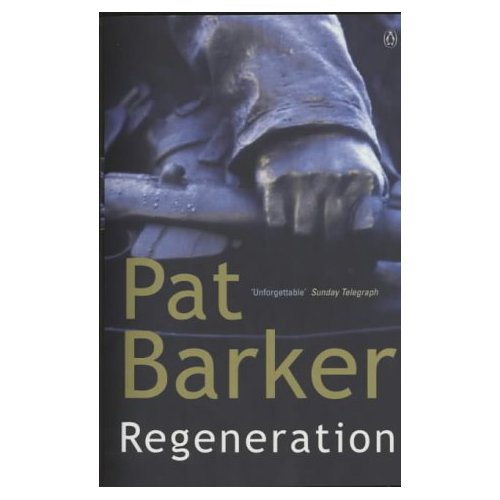
Regeneration aka Behind the Lines (1997) or Psychiatry, Poetry and Shell Shock during WWI

Based on British novelist Pat Barker´s incredible book Regeneration, the first book in her Regeneration trilogy, this movie has an awful lot to offer. Unfortunately like some other brilliant war movies (e.g. When Trumpets Fade) it never got its due appreciation by the public. This is a bit sad since everybody included in this film, especially the actors, did a brilliant job. Jonathan Pryce´s way of playing the eminent Dr. Rivers in such an understated manner impressed me a lot.

Set in WWI England and the French trenches Regeneration looks into so much more than  just into it´s central theme shell shock. Class and duty, courage and a sense of utter futility coming from the colossal losses of lives are some of many themes.

Another interesting aspect is that Regeneration also looks at the birth of a medical discipline namely psychiatry in its struggle to become a well-respected way to cure people. During the times depicted in the movie however its sole purpose was to restore the ill young men and make them fit to be sent back to the trenches.

A further central theme is the poetry of young poets such as Siegfrid Sassoon and  Wilfred Owen. The people we encounter at the heart of this movie are mostly intellectuals.

The story circles around the poet Sassoon (James Wilby) who is considered to be a war hero. He has written a letter of protest against this war that is still going on despite all better understanding. To avoid court-martial he is sent to the asylum to be treated for shell shock. He does have recurring nightmares but apart from that he seems unharmed.

As mentioned before we also find a thematization of the topic of class. The officers were mostly from the leading upper class. One patient however made it to a higher rank without the usually required background. One more  look from another angle at this complex mess of a war.

There are many other patients in the asylum that have been marked more deeply than Sassoon. Some stammer, some lost their speech altogether, others suffer from hallucinations, delusions or other forms of psychotic reactions. One of them, Billy Prior (Johnny Lee Miller), is a very interesting character, so is Wilfred Owen (Stuart Bunce), the young poet.

Dr. Rivers (Jonathan Pryce) who is also a leading anthropologist is a very gentle psychiatrist (We learn more about him in the novels. The sequels to Regeneration, The Eye in the Door and The Ghost Road elaborate these aspects. Being an anthropologist myself I would have liked to see sequels of those movies. As an avid reader it is rare I am truly impressed by books but I was when reading this trilogy. Unbelievably good.). He tries to heal by listening to his patients and help them regain their memory of often unspeakable horrors. Empathy and compassion are Rivers´ trademarks. He cares deeply for his patients and it is tragic when he  ultimately realises that all he does is cure them to send them off to face a certain death.

During the movie we are also shown one other doctor´s techniques at curing mutism originating in shell shock. They are revolting to say the least.

What made this movie so remarkable  is the way it chose to show the scenes in the trenches. Even tough it is a color movie, the use  of color during the trench scenes is attenuated, creating almost black and white sequences. This is convincingly artful. The just middle between the black and white of All Quiet on the Western Front and the corny choice of color in Passchendaele.

Regeneration is one of the best war movies on WWI. It excells in showing the absurdity of war, friendship among men, the birth of a discipline, the power of poetry to convey even the most horrible adequately. Yes, it is a rich movie. Would I want to do it justice, this already long post would be at least three times  longer. Putting  my review in two words: Watch it!

Should you be interested in more background information you should read a first hand account of one the people shown in the movie.  Why not read Robert Graves´ (played by Dougray Scott) autobiography Goodbye to All That?  Graves was Sassoon´s closest friend and responsible for his escaping court-martial. Of course Paul Fussell´s book  The Great War and Modern Memory does also take a closer look at the above mentioned poets. This is dense however not less recommended reading.

Regeneration at amazon.com, amazon.co.uk ,amazon.de

Is Passchendaele (2008) the new Pearl Harbor (2001)?

“The British couldn´t do it, the French couldn´t do it. It´s  only us, the Canadian corps” (quote from the movie).

I was  tempted to write: “Once we had Pearl Harbor now we have Passchendaele” and leave it at that. But that won´t do. I´m afraid I must say, that this would have been an easy escape in terms of criticism for Passchendaele. And extremely unfair to Pearl Harbor. This coming from someone who thinks that Pearl Harbor does not even deserve the label “war movie”.

The story in a few words: As the war went on Canadians were getting more and more involved. Being only a little nation at the time, the participation of 600000 was enormous. 1 out of 10 did not come back. At Passchendaele alone 4 000 Canadians died and 12 000 were wounded. This unspeakable tragedy is meant to be shown. To illustrate this we see the exemplary story of one Sgt. who comes back after having fought at Ypern, on Vimy ridge etc. He’s a decorated war hero but shell-shocked. He has done something unspeakable and cannot forgive himself (apparently this bit is taken from Paul Gross´grandfather´s story of his participation in WWI). He is really bad off and won´t have to return. But, as some sort of love sacrifice (not going into details here I leave all the enjoyment of watching this movie and discover a piece of subtle sophisticated filmmaking to you. YES… I´m being sarcastic.), he goes back and ends up fighting at Passchendaele. This is one of the biggest and most notorious battles off WWI. Initially a success for the Canadians and their allies, in the end a failure due to the fact that a few months later Passchendaele was lost again to the Germans.

Watching Passchendaele I was feeling extremely stupid. Why did it escape my attention that this was again a hero + nurse + absurd conflict romance disguised as war movie? Unfortunately the romance part is nowhere near as good as the one from Pearl Harbor (Yes, I think Pearl Harbor is a very entertaining romance, well done). And the war parts? They are odd to say the least. We do see quite a bit of fighting. Between town ruins and in moors and muddy trenches. The odd bits reminded me of  Windtalkers (so watch out all you who liked Windtalkers). Many explosions, one unconvincing “in the trench of the enemy scene” plus, this was quite original, people keep on flying like puppets. Oh and… I almost forgot this…the way the Canadians are depicted is priceless. What a jolly crowd. Jolly, jolly, jolly. They never stop laughing not even when they are torn apart or their comrades come flying over their heads. Why? What in the name of everything does this mean? One last word: the conversations are among the worst ever heard. In the trench Sgt Dunne actually says to his lover´s young brother, explaining the war : “Forests burn cos they have to, oceans go up and down cos they have to…and I don´t think we are that different…(…) this is something we do cos we are good at it…” Forests burn cos they have to, eh? The inherent nature of the forest is to burn? Very deep. Abysmal.

You know what? Even though many Canadians appreciated this movie (probably purely because at last their heroic participation was brought to our awareness. NO. I´m not being sarcastic now.). … I think they would have deserved better. To be really blunt: I think this movie is shit.

Be it as it may, there is one good bit related to the death of the nurse´s father – no I won´t tell what it is – and I am sure: this movie has and will have its fans.

If I had watched the trailer before buying the DVD I would at least have known about the romance bit. Can´t judge a film by its cover, can we ? (Liked this one too much for my own good).

The Pacific versus Band of Brothers: Should we compare?

I finally got to watch the last episode of The Pacific. Even though I had an entry on it a while back I didn´t feel like writing about it before I had seen the whole series. It proved to be  a good decision since I couldn´t really appreciate it at first. I couldn´t help myself, like so many others, and compare it constantly to Band of Brothers. Apart from being a HBO miniseries produced by Spielberg and Tom Hanks, opening with men who were there talking about their experiences, those two series have nothing in common. Sure they both show a lot of very intense and gruesome infantry combat scenes but that is that.

Band of Brothers, as the title eloquently indicates, was about a close-knit group of men, one Army Infantry Company. This is not the case in The Pacific. The Pacific focuses on three main characters, the three marines Sgt. John Basilone, PFC Robert Leckie and Eugene B. Sledge. The last two wrote books about their experiences. The first episodes focus on Leckie, whereas the last ones tell Eugene aka Sledgehammer´s story. This last detail is based on the fact that Eugene went to war much later than the others. He missed Guadalcanal and Cape Gloucester, one main battle and one major experience of the war in the Pacific.

The mini series shows a lot of off the battle ground episodes. Soldiers on leave in Australia, Leckie´s stay at different hospitals and later we see Sledge back home. Many of this off the battleground parts look at the symptoms of post-traumatic stress of which both Leckie (in a very physical way-peeing himself-) and Sledge (more psychological-he´s depressed and has endless nightmares) suffer intensely.

The series has  many crucial moments. Truly gory battle scenes.  Endless rain on Cape Gloucester that grinds down the morale. The realization that all they learn is “killing Japs”.

There is one key scene, the moment when the two friends Sidney and Sledge meet as one leaves and the other arrives in the Pacific. Sledge wants to know from Sidney how it is to be fighting but he doesn´t get an answer. This is actually a recurring theme in war movies (there is a scene like that in The Deer Hunter and in many others): the inability of those who have experienced it to tell those who are about to experience it what it is like to be in combat. Or maybe it is not so much an inability as a refusal. They have been there, they know it´s no use. You cannot talk about something that is so completely different from anything you imagine. No one who hasn´t been there will ever know what it is like and there are no words to really convey this, nothing that equals the experience. All you have got in the face of the innocent and ignorant is silence. The Pacific shows this very well.

I would like  to point out specifically one further scene. It is related to one of my major points of interest namely Death. In The Pacific we see one of the most touching deaths in the history of war movies. I don´t want to spoil anything so I´m not going to tell you who is dying. What makes this scene so different is the way it is shown. We do not see the actual dying, we hear that the person died and then the corpse is being carried  by some soldiers and transported through the lines of men standing there paying tribute and crying. This is a genuinely heartfelt and sad moment. A display of utter futility.

Something else is very different from Band of Brothers. Even though it was WWII, this wasn´t the same war. This is not about a bunch of soldiers freeing occupied countries and captives. We have no rewarding moments like the one in Band of Brothers when they liberate people in a concentration camp. The war in the Pacific seems much more futile at moments. And senseless. And it lasted longer. The war in Europe was already over, Germany had surrendered but Japan had not. Only after Little Boy and Fat Man did this war stop. This must have been some sort of an anticlimax. By the time those soldiers came home, the whole world had already been celebrating the end of the war. The party was over and they had missed it.

Needless to say that this influences the tone of the movie.

For all these reasons I do not think it is doing The Pacific any justice to compare it to its older brother.  It really has its moments this series.

One last thing needs mentioning though and it is something I did not enjoy much. The Japanese are never ever shown in a positive light. You truly get the impression that they were a bunch of murderous automatons. If anyone wants to see a more honest depiction I suggest you watch Tora Tora Tora (1970) or Letters from Iwo Jima (2006). They both try to and  succeed in doing the Japanese justice.

amazon.com