12 Russian War Movies You Must See

Russia is another of those countries whose film production rarely disappoints. I haven’t seen all of the below mentioned movies yet but have read a lot about them and have seen parts of them. There are most certainly more but these seem to be the most important ones. They are quite different. Some, like 9th Company, are pure, gritty  infantry combat, others like Come and See are more experimental. Mongol and Admiral are quite beautiful. What they all have in common is a feel of authenticity, and a way of showing how atrocious war is that is very unique and emotional. If you haven’t seen any Russian war movies so far, I would suggest you change that as soon as possible.

The Fortress of War aka Brestskaya krepost (2010) Dramatic infantry combat. The Germans attack the Brest Fortress from all sides. Soldiers and civilians fight for their life. (See my review)

Admiral (2008) The true story of Admiral Kolchak. WWI and Russian Revolution. War Movie and Love Story. (Here is my review)

Mongol (2007) The story of the rise of Genghis Khan. (Here is my review)

9th Company aka 9 Rota (2005) Gritty infantry combat in Afghanistan. It has similarities with Platoon but the characters are very different, very emotional. (See my review)

The Thief aka Vor (1997) Childhood drama that starts during WWII.

Come and See aka Idi i Smotri (1985) A young boy gets caught up in the atrocities of WWII.

The Dawns here are Quiet aka A zori zdes tikhie (1972) The story of a group of female soldiers during WWII.

Ivan’s childhood aka Ivanovo detstvo (1962) A young boy works as a spy at the eastern front. Three Soviet officers try to take care of this boy-child.

Ballad of a Soldier aka Ballada o Soldate (1959) A 19-year-old soldier gets a medal for bravery. On his leave he meets a girl on the train and falls in love with her. (Here’s my review)

The Story of a Man aka Sudba cheloveka (1959) The story of a man whose life is destroyed by WWII. When his village is bombed his wife and children are killed.

The Cranes are Flying aka Letyat zhuravli  (1957) A young woman waits for the love of her life to return from the war. The movie shows the battlefield and the home front. (See my review)

Battleship Potemkin aka Bronenosets Potyomkin (1925) A silent movie classic. One of the first war movies ever with a lot of famous scenes. Very expressive.

It is also worth mentioning other movies by Sergei Bondarchuk like War and Peace or Waterloo. They are all excellent but mostly co-productions with international stars that’s why I didn’t include them but chose The Story of a Man instead.

Do you have any favourite Russian war movies and/or recommendations?

Peter Weir’s The Way Back (2010)

I wasn’t aware of this movie despite the fact that Peter Weir is one of my favourite film directors. I’m glad that The War Movie Buff told me about it.

Even though I like some of Weir’s older movies and also Master & Commander a lot, I didn’t expect anything before watching The Way Back. I’m glad I didn’t, I think I would have been very disappointed if I had.  I’m afraid it is Peter Weir’s weakest film ever. The story, based on true events, had a lot of potential, the actors were mostly well-chosen, the cinematography is stunning, the score is convincing and still…. There is something missing. I couldn’t help comparing it to another POW movie, also starring Colin Farrell, namely Hart’s War. While Hart’s War focuses on how the prisoners escape from the camp, The Way Back shows their long journey from the Siberian gulag to India.

The movie starts in Poland in 1941. Janusz has been captured. His wife denounced him under torture. He is a spy and sentenced to spend the next 20 years in a Siberian gulag. He’s a strong young man, optimistic, kind and resourceful. He makes friends in the camp, some tell him that it is possible to escape. He chooses a few who will follow him, they prepare their escape and one night they do it.

It’s a small group of seven people, headed by the spirited Janusz (Jim Sturgess). An American (Ed Harris), a Russian criminal (Colin Farrell), a Polish priest and others. One dies in the early days. The hardships of their journey are unimaginable. First they walk for weeks from the camp to Lake Baikal, then to Mongolia, the Chinese wall, across Tibet and into India. They cross the mountains and deserts, almost die from cold, hunger and thirst. After a few weeks, they are followed by a young girl who finally joins them. Some make it, some don’t.

On their way, each time they cross the border of a country, they see how far Communism has advanced. Since they escaped a gulag, they have to get to a country that is free of communism. The moment they enter Mongolia and then China, they know, they have to make it to India.

I’ve seen my share of POW movies. The Way Back is one of the weakest, it’s more a survival story that is told in a boring way. The fact that Colin Farrell was in Hart’s War (which I think was a bad movie here is my review) and in this one, made matters worse. One cannot help comparing those two movies and also see parallels between the choice of Ed Harris in this one and Bruce Willis in the other.

I guess you gathered that this movie left me pretty unfazed. It’s not bad it’s just lacking something.

If you want to watch a truly good newer POW movie watch Werner Herzog’s Rescue Dawn (here is my review). Of the older ones I like The Colditz Story best.

Max Schmeling – Fist of the Reich aka Max Schmeling – Eine deutsche Legende (2010) Biopic of the German Heavy Weight Legend

Yes, I did it, I watched a Uwe Boll movie. I have never watched any of his other movies before, it seems they are a bit on the trashy side and I’m not tempted to watch the controversial sounding Auschwitz. Now that this has been clarified, I will concentrate solely on Max Schmeling – Fist of the Reich aka Max Schmeling – Eine deutsche Legende. The reception of this movie is a bit surprising. It got 4.1 on IMDB, the only person who reviewed it gave it 3/10. The reviewer is German. On amazon.de the reviews are mostly 1/5 and 2/5 stars. When you hop over to amazon.co.uk you are in for a surprise. The reviewers rate it  mostly 5/5. I’m pretty sure, I can tell you why this is the case. (Personally I would rate it 3/5 or 6/10).

The way the story is told is somewhat plump. It’s linear storytelling apart from the very first moment where we see Max Schmeling in uniform traipsing around Corfu. These are painful moments for German-speaking people as we hear the “actor” Henry Maske talk. Imagine Schwarzenegger talking through a half-swallowed potato… You can hardly understand what the guy is saying, it’s obvious he is no actor. Every time he opens his mouth during the movie, native German speakers will either laugh or cringe. I’m quite sure this (plus Boll’s reputation) were the main reasons why it got such bad German ratings.

Once you have passed this initial bad scene you will start to understand that Henry Maske was a perfect choice. Even Schmeling himself was wishing for Maske to play the role one day.

Schmeling was a gutsy boxer, one with courage, who loved to prove himself. At the same time he was very fair with his opponents. When the Nazi’s started to rise he was on the rise as well. They liked to win over athletes as they corresponded to the Nazi ideal of strength, health and invincibility. Schmeling who held the heavy-weight champion title for quite a while was especially liked by Hitler. But when Schmeling announced that he, his trainer (Heino Ferch who is excellent as always) and his Jewish agent were flying over to New York to fight against Joe Lewis, the Nazi leaders were strictly opposed. Joe Lewis had the reputation of being invincible. He knocked out all of his opponents in a few minutes. And he was African-American which seemed hardly the right choice for someone belonging to the master race, as the Nazis called themselves. It took guts to disregard the orders and fly to New York anyway.

What happened in New York is boxing history. Max Schmeling knocked out Joe Louis and after this he was definitely  the Nazis’ favourite pet athlete. Still, when he announced he would go back to New York and face Joe Luis again, they didn’t approve. They were right this time.

He returned beaten and was sent off to war immediately. No other athlete had to go to war, but someone who lost against an African-American and ridiculed the master race had to be punished.

All these are things, I didn’t know. I didn’t know either that Schmeling and his wife were one of the most famous couples in German history. She was an actress and they got married before he flew to New York for the first time. They stayed happy together until her death in the 80s. Schmeling lived until 2005. After the war he had a hard time making a living and wasn’t denazified at first.

For all those who moan about Henry Maske’s acting I’d like to say, that it is not fair. This is a boxing film. 60% of the movie centers on the fights, training and boxing. If you like boxing, you will like this movie as Maske is an excellent boxer. He was the world title holder for many years – not in heavyweight but in light heavyweight – and used to be one of the best-liked German sports people. He is originally from the former German Democratic Republic which explains the mumbling to a certain extent as their accent is a bit on the rough side.

I’m fond of Maske, he is a likable person, I also like boxing and found the fights gripping. Certainly not a great film but entertaining and interesting.

I only found a German trailer but the movie has been subtitled.

The Thin Red Line (1998) Part IV The Actors and the Characters

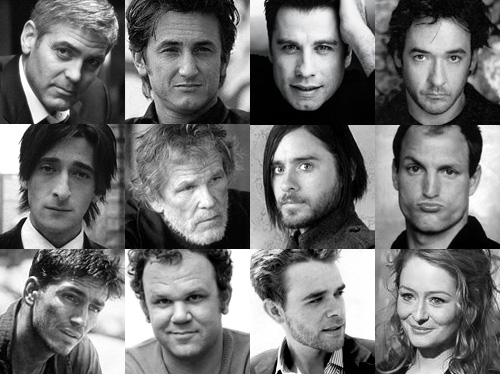
The Thin Red Line is a movie with an incredible cast. This is not uncommon in war movies but what is unusual is that we have actors from a very wide range in the same movie. Actors you’d hardly ever see together in another movie. I’m pretty sure this was done on purpose. Seeing the actors and the characters gives a feeling of heterogeneity. This isn’t a “Band of Brothers”, these are individual characters thrown together by the circumstances. Of course I will have to mention this again in my most anticipated post of this series Saving Private Ryan versus The Thin Red Line (which is not so much a duel than a simple comparison, to show, that those two movies go together like two faces of a medal).

The actor is one thing, the characters another. This post is meant to explore the characters. Not all of them, of course, not even all those who are included in the opening picture. I don’t want to write a 2000 words post.

Brig. General Quintard aka John Travolta (Pulp Fiction, Love Song for Bobby Long)

Like in every war movie, there are good characters and bad ones, likable ones and idiots. Although it is one of the strengths of The Thin Red Line to show the complexity of human beings, and therefore we do not find black and white characters, John Travolta’s character is the only really negative one in this movies. This is pure asshole material.

We only see General Quintard at the beginning of the movie when he instructs and – in my eyes also debases – Lt. Colonel Tall. Quintard is typical High Command. He most certainly will never see action. He is preposterous and enjoys putting down people. Malick has him stare over the ocean for a while, which means nothing else than that the guy is in an abstract, combat-free zone, somewhere above everything and not really interested in things and even  less in people. An empty shell.

Lt. Colonel Tall aka Nick Nolte (The Prince of Tides, Cape Fear)

There have already been quite a lot of discussions involving Tall in the former posts. I know I argued he is the typical “mad” superior officer, going over dead bodies to achieve what he has been told. He blindly follows orders and believes in the chain of command like in nothing else. While all this is true, to a certain extent, it’s not the whole picture we are given. Tall is far more complex than that, and I agree with a commenter, who stated that this was another proof of how excellent a movie The Thin Red Line is.

When we see Tall and Quintard together we already learn that this is pretty much the last chance for Tall to prove himself. He’s been left out during all the last promotion rounds. One can only suspect why this was the case. Seeing the type of superior he has, we can assume he didn’t have the right contacts. This has made him bitter, this and the fact that his son didn’t want to join the Army but prefers to sell fish bait.

Bitterness and the fear to fail are powerful drivers and he looses perspective easily. He tries to see the bigger picture and wants to achieve success, no matter how high the costs. He thinks that sacrificing a few to save a lot is justified. He thinks you have to drive the men, despite their hunger and fear. When given the choice, however, he will let them rest and drink. He isn’t sadistic. He is just extremely driven and not inclined to think about the individual need of his soldiers. He shouts and screams and fumes in a totally exaggerated way. That’s why I called him crazy. He is neither abusive nor does he enjoy being mean.

Private Witt aka James Caviezel (The Passion of the Christ)

Witt has the role of the one who questions good and evil. He is also the one character who would – and eventually does – sacrifice himself for others. In this he can be compared to Sgt Elias in Platoon. I mentioned it somewhere else, but I’ll mention it again, I don’t think it was a coincidence that Dafoe who played Elias later got to play Jesus in The Last Temptation of Christ, just like Caviezel played Jesus in The Passion of the Christ after The Thin Red Line. They ooze a saviour aura in the war movies that stuck to them and was later exploited by other directors.

Private Witt is teamed up with Sgt Welsh. These are two characters that clash when looked at superficially. If you look at it more closely however, they have a lot in common.

Sgt Welsh aka Sean Penn (Dead Man Walking, Mystic River)

We tend to have our favourite characters in a movie and in this one, my favourite one is Sgt Welsh. Sean Penn is also one of my favourite actors. I would argue that this is one of the most memorable characters in any war movie but you need to watch it at least twice to realize it. He is cynical but out of vulnerability. He is one of those who does the right thing, the good thing at the right moment but he doesn’t want it to be mentioned. He is discreet and calm. The biggest difference between him and Witt is the fact that he is no believer. Nothing makes sense to him, he thinks that all that happens is down to human nature which is inherently bad.

Capt. John Gaff aka John Cusack (High Fidelity, 2012)

Capt John Gaff is one of those young, eager officers that have the words “promising career” written all over their faces. He isn’t a bad sort but distant and withdrawn. He is everything that Tall would have loved his own son to be. At the same time he is probably also everything Tall himself would have liked to be.

Capt Staros aka Elias Koteas (Shooter, Shutter Island)

Capt Staros is the antithesis of Tall. Tall isn’t a completely bad guy, but Staros is decidedly a truly good one. He will always think of his men first, which means he will always think of the individual first. Maybe sacrificing a few would bring the desired outcome of a  mission but that is not the way Capt Staros, a deeply religious man, would ever go. He is also very courageous and, if necessary, disobeys orders. His feeling for what is good and right is so strong that he will not think about the consequences his insubordination will have for him. But he isn’t a Private Witt, he wouldn’t sacrifice himself. He also doesn’t believe that people are inherently good but he thinks they deserve to be protected.

Sgt Keck aka Woody Harrelson (Natural Born  Killers, The Messenger)

Sgt Keck is worth mentioning because his death is so useless and tragic and on top of that his own fault. He gets one of the longest dying scenes of the movie and while he realizes he will die he goes through a wide range of emotions in a very brief period . He is one of the good ones, a good sort who dies, not through enemy fire, but through a tragic accident that underlines futility and the randomness of death.

Private Bell aka Ben Chaplin (Murder by Numbers, The Remains of the Day)

It’s through the character of Private Bell that the battlefield and the home front get connected, the life of the soldier and the life of the civilian meet. All through the movie he is thinking of his wife back home and their love for each other. It’s a bit of a war movie cliché that he is the one who gets a letter from his wife telling him that she found someone else because she was too lonely.

As you can see in this older post, there are many other actors and characters in the movie. Some like Lt Whyte (Jared Leto) and Cpt Bosche (George Clooney) have just tiny roles. One stands for the numerous men who died without anyone ever really knowing them, the other one is one of hundreds of officers that come and go endlessly. Some are good, some are bad, some are remembered, many are forgotten.

If you have seen The Thin Red Line, who is you favourite character?

If you are interested in the other parts here is

Part I The Review

Part II On Death and Dying

Part III Nature and Evil

Part V The Thin Red Line vs Saving Private Ryan is upcoming.

Ken Loach’s Route Irish (2010)

I’ve read a few reviews of Route Irish and while I agree this may not be Ken Loach‘s best movie, I thought it was far better than I expected. There are a few awkward moments but overall it’s well done, well acted, interesting and suspenseful.

Fergus and Frankie are best friends since childhood days. They are inseparable. They join the army together and leave it together. While Fergus starts working as a contractor for Tyree (an organisation like Blackwater), Frankie does the odd job in their hometown Liverpool. The problem is that odd jobs don’t bring money and he is not with Fergus. That’s why he joins up with Tyree as well and they go to different “hot places” together. 10000 £ per month seem enough money to justify what they are doing and to accept the risks they are taking.

Organisations like Blackwater are the face of modern warfare. Although the men are called “security personnel” by their employers, what they really are is mercenaries. Iraq is a particularly ugly place to be. It’s messy and chaotic. They are constantly shot at and shoot back.

While Fergus is in Liverpool, Frankie is on his last mission, escorting a reporter.  He is killed on Route Irish, the most dangerous street in the world, the road that leads from Baghdad to the Green Zone.

Fergus is guilt ridden because he wasn’t there for his friend. Just before his death, Frankie tried to call Fergus several times as clearly something was wrong in Baghdad. A mobile phone that Frankie has sent to Fergus shows that he was involved in the shooting of civilians and that one of the other mercenaries wanted to cover this up. Fergus is convinced that Frankie wasn’t just in the wrong place at the wrong time but that he was murdered. He swears to track down the killers and take revenge.

Ken Loach could have chosen different ways of showing us the corruption and lawlessness of modern-day warfare and organisations like Blackwater but I thought a thriller wasn’t a bad choice. I liked Route Irish and think it is worth seeing. Not only for fans of Ken Loach.