ANZACS Part IV and V (1985) The Battles of Amiens and Hamel

This is just a short wrap-up post. I finally watched the last two episodes of the ANZACS mini-series and I liked them as much as the first three. There were a few predictable moments and the end was a bit anti-climatic but very realistic.

I would really like to recommend the series once more. It’s excellent. It’s also an amazing story. The bravery and courage of the ANZACS was really something. I already said it in another post that one thing that struck me was the way they went to war. They took it like some sporting adventure, they were big on comradeship and good spirits. It seemed a bit stretched at first but I’ve done some research and some of my readers confirmed that this was the way they were.

What you get to understand as well, when you watch this series is the huge difference the end of the war represented for the Australians and the French. All through the series you see the ravaged landscape, the bombed villages and although some places remind the lads of home, their country remained untouched. I’m not saying the contribution wasn’t great, no, but when they were finally back home, they could really leave the war behind. That was not possible for the French soldiers who had to cope with a devastated country. The land has still not fully recovered until today. There are still places where you see craters and trenches, where they left the barbed wire and there are still bombs exploding.

While Part IV is still heavy on combat, Part V, which is a bit anti-climatic, is a quiet part. It centers on the Armistice and the ANZACS’ return home to Australia.

Here are the reviews of Part I GallipoliPart II The Somme  and Part III Passchendaele.

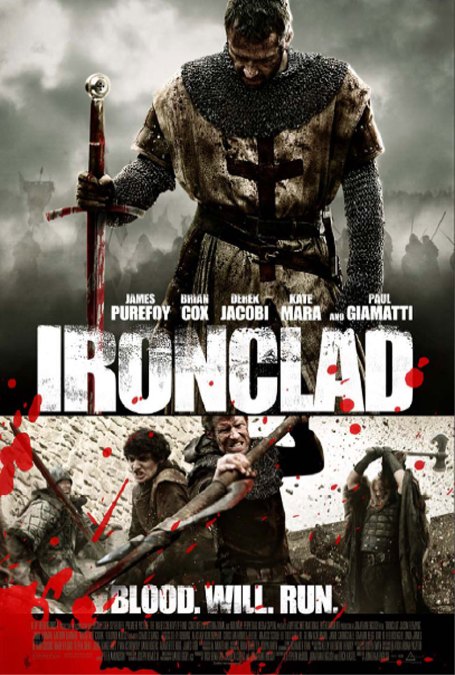
Ironclad (2011) A Medieval Gorefest

I don’t think you will hear me say this very often but I must say it this time: This movie was way too gory for me. That bothered me more than the liberties that were taken with history. Or, to be honest, I’m not sufficiently familiar with 13th century England. I know the movie is loosely based on historical facts but the details elude me.

Having said all this you probably think I didn’t enjoy it. Wrong. I like Ironclad a lot. In a guilty pleasure kind of way and during those moments when there was no chopping off of hands, feet and tongues to be seen. I like stories about a small group of men fighting a large number, I like sieges and I think the time period makes for great battles scenes and fights with swords, bows and arrows. And for once the love story wasn’t too corny.  All in all the battle scenes reminded me a bit of the one in Lord of the Rings (Helms Deep) and the love story had a Last of the Mohicans feel (of course not that good but nice enough). Compared to movies like Centurion, I would say, it was much better.

King John of England is a hated monarch. In 1215 rebellious barons force him to sign the Magna Carta a document that will uphold the rights of free-men. A few months later he reneges on his word and with a small army tries to get the kingdom back.

A small group of Knights Templar help one of the barons to fight him. They find some more men, mercenaries, who join them in their fight. They are only seven but all of them experienced fighters. They know he will try to visit each and every baron and take revenge on him. If they can prevent him from entering Rochester Castle, they can prevent his entering England. The group of seven men rides to the castle and arrives just in time before the king’s men. They are in for a long and harrowing siege.

Their number is tiny and it doesn’t seem realistic that they should be able to fight the large army of King John. Their hope is the French army that is approaching and will help them against King John.

Being inside of a castle like Rochester Castle has a few advantages but their losses are high anyway. Every time the army of the king attacks,  a defense layer of the castle goes. Those who are captured are tortured and mutilated. After a few weeks of siege, the people inside of the walls are starving, the baron to whom the castle belongs starts to freak out and the nerves lay bare.

It’s  a very action-driven and suspenseful movie. The actors are quite good, although I needed to get used to Paul Giamatti as King John. He looks really insane. The leader of the group of seven men is the Knights Templar and played by James Purefoy. I personally liked him better than Fassbender in Centurion. I thought the battle scenes and fights were well done and the special effects were quite good as well.

Rated in the category of medieval action-war adventure it deserves at least 4 out of 5 stars

Nacht fiel über Gotenhafen aka Darkness Fell on Gotenhafen (1960) One of the Biggest Ship Disasters in History

What a surprisingly good movie. I discovered it purely by chance and didn’t expect much but it was well worth watching. The central theme of Nacht fiel über Gotenhafen aka Darkness Fell on Gotenhafen is the tragic sinking of the huge cruise ship Wilhelm Gutsloff. The Wilhelm Gustloff was named after a famous Nazi leader. In the final days of the war it was used to transport refugees from Eastern Prussia to safer German territory. The disaster of its sinking is called by some “the unknown disaster” and if it weren’t for websites like WM.S. Wilhelm Gustloff-The Unknown Disaster it would probably stay widely unknown outside of Germany. The Gutsloff was torpedoed by a Russian submarine and sank with over 6000 people on board. Most of them died, among them 4000 children. The sinking of the Wilhem Gutsloff is seen today as one of the symbols of the Downfall of the Third Reich.

Before watching I thought the whole movie would focus on the final hours but that wasn’t the case and that’s why it was such a great movie. Apart from a few melodramatic elements in the beginning, it’s surprisingly well done. Another main theme of Darkness Fell on Gotenhafen is the situation on the home front, what the women and children had to endure during the war in the city.

The film tells the story of one woman and starts with a ball on the Wilhelm Gutsloff on her maiden voyage as a cruise ship. Maria is engaged to Kurt but Hans is in love with her as well. Later, during the war, Maria and Kurt are now married and Kurt is fighting with the army, Hans, who is officer on a ship, is visiting the city and meets Maria. He is still in love with her and seduces her. She gets pregnant and afraid of the reaction of her husband and because the city is constantly bombed, she flees to a friend in the country, somewhere in East Prussia. She meets a group of interesting characters, a French POW and the widow of a an Army General.

Maria and her friends believe at first that they are safe in Prussia. They are far from any front and assume the war will soon be won. When tales of the Russian approach are heard, they don’t believe them at first until it becomes certain that Germany is about to lose the war and the Russians approach fast. Hans who wanted to see his son, has been staying with them for a while. He tells them about the Gutsloff that will evacuate a great number of women and children. He can convince them that they have no other chance. Finally  they abandon the house and flee together with many others to the Gutsloff. The Russians have already arrived and kill and shoot people.

The ship waits the whole night until it is allowed to sail. Nobody sees any danger. They think the Russians are still too far away and fought back by the German fleet. When the ship finally sails it is soon torpedoed. The ship sinks fast, too fast for most of the passengers.

One could say, the movie has five parts. Each part focusses on other elements of the war. First the war is only a foreboding, then we see how the civilians in the cities struggle, the fear and loneliness of the women, how many flee to the country and how they still believe the war can be won although its lost already. The moments on the ship are excellent and tell quite a few mini-stories. The end is done very well too, dramatic but not melodramatic.

I was surprised that there were such a lot of strong female characters in a 60s movie. Brigitte Horney, one of the great German actors, is outstanding in her role as widow of a General.

The movie has an English title but I have no idea whether it has been subtitled or not. And there was no trailer to be found. If you understand German, you can watch it on YouTube.

12 Russian War Movies You Must See

Russia is another of those countries whose film production rarely disappoints. I haven’t seen all of the below mentioned movies yet but have read a lot about them and have seen parts of them. There are most certainly more but these seem to be the most important ones. They are quite different. Some, like 9th Company, are pure, gritty  infantry combat, others like Come and See are more experimental. Mongol and Admiral are quite beautiful. What they all have in common is a feel of authenticity, and a way of showing how atrocious war is that is very unique and emotional. If you haven’t seen any Russian war movies so far, I would suggest you change that as soon as possible.

The Fortress of War aka Brestskaya krepost (2010) Dramatic infantry combat. The Germans attack the Brest Fortress from all sides. Soldiers and civilians fight for their life. (See my review)

Admiral (2008) The true story of Admiral Kolchak. WWI and Russian Revolution. War Movie and Love Story. (Here is my review)

Mongol (2007) The story of the rise of Genghis Khan. (Here is my review)

9th Company aka 9 Rota (2005) Gritty infantry combat in Afghanistan. It has similarities with Platoon but the characters are very different, very emotional. (See my review)

The Thief aka Vor (1997) Childhood drama that starts during WWII.

Come and See aka Idi i Smotri (1985) A young boy gets caught up in the atrocities of WWII.

The Dawns here are Quiet aka A zori zdes tikhie (1972) The story of a group of female soldiers during WWII.

Ivan’s childhood aka Ivanovo detstvo (1962) A young boy works as a spy at the eastern front. Three Soviet officers try to take care of this boy-child.

Ballad of a Soldier aka Ballada o Soldate (1959) A 19-year-old soldier gets a medal for bravery. On his leave he meets a girl on the train and falls in love with her. (Here’s my review)

The Story of a Man aka Sudba cheloveka (1959) The story of a man whose life is destroyed by WWII. When his village is bombed his wife and children are killed.

The Cranes are Flying aka Letyat zhuravli  (1957) A young woman waits for the love of her life to return from the war. The movie shows the battlefield and the home front. (See my review)

Battleship Potemkin aka Bronenosets Potyomkin (1925) A silent movie classic. One of the first war movies ever with a lot of famous scenes. Very expressive.

It is also worth mentioning other movies by Sergei Bondarchuk like War and Peace or Waterloo. They are all excellent but mostly co-productions with international stars that’s why I didn’t include them but chose The Story of a Man instead.

Do you have any favourite Russian war movies and/or recommendations?

http://www.youtube.com/watch?v=FVB9Xz2DyME

The Thin Red Line (1998) Part IV The Actors and the Characters

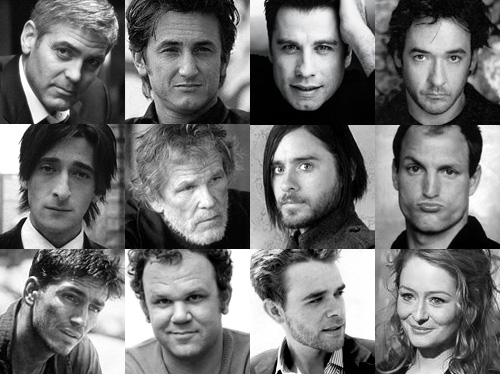
The Thin Red Line is a movie with an incredible cast. This is not uncommon in war movies but what is unusual is that we have actors from a very wide range in the same movie. Actors you’d hardly ever see together in another movie. I’m pretty sure this was done on purpose. Seeing the actors and the characters gives a feeling of heterogeneity. This isn’t a “Band of Brothers”, these are individual characters thrown together by the circumstances. Of course I will have to mention this again in my most anticipated post of this series Saving Private Ryan versus The Thin Red Line (which is not so much a duel than a simple comparison, to show, that those two movies go together like two faces of a medal).

The actor is one thing, the characters another. This post is meant to explore the characters. Not all of them, of course, not even all those who are included in the opening picture. I don’t want to write a 2000 words post.

Brig. General Quintard aka John Travolta (Pulp Fiction, Love Song for Bobby Long)

Like in every war movie, there are good characters and bad ones, likable ones and idiots. Although it is one of the strengths of The Thin Red Line to show the complexity of human beings, and therefore we do not find black and white characters, John Travolta’s character is the only really negative one in this movies. This is pure asshole material.

We only see General Quintard at the beginning of the movie when he instructs and – in my eyes also debases – Lt. Colonel Tall. Quintard is typical High Command. He most certainly will never see action. He is preposterous and enjoys putting down people. Malick has him stare over the ocean for a while, which means nothing else than that the guy is in an abstract, combat-free zone, somewhere above everything and not really interested in things and even  less in people. An empty shell.

Lt. Colonel Tall aka Nick Nolte (The Prince of Tides, Cape Fear)

There have already been quite a lot of discussions involving Tall in the former posts. I know I argued he is the typical “mad” superior officer, going over dead bodies to achieve what he has been told. He blindly follows orders and believes in the chain of command like in nothing else. While all this is true, to a certain extent, it’s not the whole picture we are given. Tall is far more complex than that, and I agree with a commenter, who stated that this was another proof of how excellent a movie The Thin Red Line is.

When we see Tall and Quintard together we already learn that this is pretty much the last chance for Tall to prove himself. He’s been left out during all the last promotion rounds. One can only suspect why this was the case. Seeing the type of superior he has, we can assume he didn’t have the right contacts. This has made him bitter, this and the fact that his son didn’t want to join the Army but prefers to sell fish bait.

Bitterness and the fear to fail are powerful drivers and he looses perspective easily. He tries to see the bigger picture and wants to achieve success, no matter how high the costs. He thinks that sacrificing a few to save a lot is justified. He thinks you have to drive the men, despite their hunger and fear. When given the choice, however, he will let them rest and drink. He isn’t sadistic. He is just extremely driven and not inclined to think about the individual need of his soldiers. He shouts and screams and fumes in a totally exaggerated way. That’s why I called him crazy. He is neither abusive nor does he enjoy being mean.

Private Witt aka James Caviezel (The Passion of the Christ)

Witt has the role of the one who questions good and evil. He is also the one character who would – and eventually does – sacrifice himself for others. In this he can be compared to Sgt Elias in Platoon. I mentioned it somewhere else, but I’ll mention it again, I don’t think it was a coincidence that Dafoe who played Elias later got to play Jesus in The Last Temptation of Christ, just like Caviezel played Jesus in The Passion of the Christ after The Thin Red Line. They ooze a saviour aura in the war movies that stuck to them and was later exploited by other directors.

Private Witt is teamed up with Sgt Welsh. These are two characters that clash when looked at superficially. If you look at it more closely however, they have a lot in common.

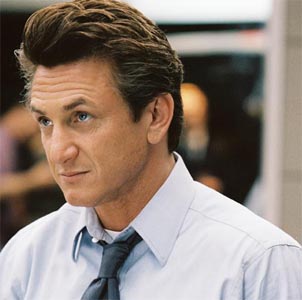
Sgt Welsh aka Sean Penn (Dead Man Walking, Mystic River)

We tend to have our favourite characters in a movie and in this one, my favourite one is Sgt Welsh. Sean Penn is also one of my favourite actors. I would argue that this is one of the most memorable characters in any war movie but you need to watch it at least twice to realize it. He is cynical but out of vulnerability. He is one of those who does the right thing, the good thing at the right moment but he doesn’t want it to be mentioned. He is discreet and calm. The biggest difference between him and Witt is the fact that he is no believer. Nothing makes sense to him, he thinks that all that happens is down to human nature which is inherently bad.

Capt. John Gaff aka John Cusack (High Fidelity, 2012)

Capt John Gaff is one of those young, eager officers that have the words “promising career” written all over their faces. He isn’t a bad sort but distant and withdrawn. He is everything that Tall would have loved his own son to be. At the same time he is probably also everything Tall himself would have liked to be.

Capt Staros aka Elias Koteas (Shooter, Shutter Island)

Capt Staros is the antithesis of Tall. Tall isn’t a completely bad guy, but Staros is decidedly a truly good one. He will always think of his men first, which means he will always think of the individual first. Maybe sacrificing a few would bring the desired outcome of a  mission but that is not the way Capt Staros, a deeply religious man, would ever go. He is also very courageous and, if necessary, disobeys orders. His feeling for what is good and right is so strong that he will not think about the consequences his insubordination will have for him. But he isn’t a Private Witt, he wouldn’t sacrifice himself. He also doesn’t believe that people are inherently good but he thinks they deserve to be protected.

Sgt Keck aka Woody Harrelson (Natural Born  Killers, The Messenger)

Sgt Keck is worth mentioning because his death is so useless and tragic and on top of that his own fault. He gets one of the longest dying scenes of the movie and while he realizes he will die he goes through a wide range of emotions in a very brief period . He is one of the good ones, a good sort who dies, not through enemy fire, but through a tragic accident that underlines futility and the randomness of death.

Private Bell aka Ben Chaplin (Murder by Numbers, The Remains of the Day)

It’s through the character of Private Bell that the battlefield and the home front get connected, the life of the soldier and the life of the civilian meet. All through the movie he is thinking of his wife back home and their love for each other. It’s a bit of a war movie cliché that he is the one who gets a letter from his wife telling him that she found someone else because she was too lonely.

As you can see in this older post, there are many other actors and characters in the movie. Some like Lt Whyte (Jared Leto) and Cpt Bosche (George Clooney) have just tiny roles. One stands for the numerous men who died without anyone ever really knowing them, the other one is one of hundreds of officers that come and go endlessly. Some are good, some are bad, some are remembered, many are forgotten.

If you have seen The Thin Red Line, who is you favourite character?

If you are interested in the other parts here is

Part I The Review

Part II On Death and Dying

Part III Nature and Evil

Part V The Thin Red Line vs Saving Private Ryan is upcoming.