10 German War Movies You Must See Before You Die

In the last years Germany has made quite a few very good war movies but there are also some older ones that have stood the test of time. I am sure I have forgotten some and left out many that are co-productions with the exception of Joyeux Noël aka Merry Christmas because it is one of my Top 10. I will very probably mention it again when I will make a post on 10 French war movies you must see before you die.

Let´s stick to Germany for the time being.

Die Brücke aka The Bridge (1959): WWII, Germany. One of the best anti-war films ever. Shows how senseless some orders are. Young people fight for a bridge although the war can´t be won anymore. It is one of the movies on my list Children in War Movies.

Hunde, wollt ihr ewig leben aka Dogs, do you want to live forever – Stalingrad (1959): WWII, Russia. A German classic. A grim look at the battle in Stalingrad.

Das Boot (1981): THE U-Boot movie. Conveys brilliantly what it is like to be helpless under water. Claustrophobic feel. Superb acting. Marvellous cast. Especially noteworthy the singer Herbert Grönemeyer.

Stalingrad (1993): WWII, grim infantry combat. German POV. One of the best war movies  ever, one of my Top 10 as well. The setting, the character portraits, the acting, the combat, the snow, the cold, the despair. A fabulous movie that gives an insight in one of the worst chapters of WWII. Another marvellous cast. Thomas Kretschmann (King Kong, Resident Evil, The Downfall, The Young Victoria) is in it. He is one of those German actors that are known far beyond Germany and Europe. (see my post on Stalingrad)

NaPolA aka Before the Fall (2004): WWII, Germany. Interesting look at the Hitler Youth. How they recruited their elite, how they brainwashed them. Poisonous Pedagogy. See my review for more details. This movie is also on the Children in War Movies list.

Der Untergang aka The Downfall (2004): WWII, Berlin. The final days of Hitler. Astonishing acting from the very great Bruno Ganz. A fascinating portrait. Eerie. Creepy.  An outstanding movie and a must see even for those who don’t watch war movies. (see my post on The Downfall)

Joyeux Noël aka Merry Christmas (2005): WWI, France. Especially noteworthy as it is about WWI. The movie depicts the so-called “Little peace”. It is Christmas and something strange is happening. The war stands still. The enemy soldiers prefer football over fighting and get to know and like each other. Based on a true story. You get a good feel for the differences of the trenches and the characteristics of the parties involved.

Sophie Scholl – Die letzten Tage aka Sophie Scholl (2005): WWII, Germany. German Resistance. One of the leaders of The White Rose, Sophie Scholl´s final days. I have hardly ever seen a movie like this. After watching it I did solemnly swear to become a better person (I am not too successful yet. It is an ongoing process. A work in progress). No, honestly, this woman or girl´s guts… So much selfless idealism and courage. I was awed.

Anonyma – Eine Frau n Berlin aka Anonyma – The Downfall of Berlin (2008) : WWII, Berlin. One of the movies I reviewed recently. I included it as it tackles a lesser known and very painful subject. The mass rape of German women by the Red Army. See my post of Anonyma.

Der rote Baron aka The Red Baron (2008): WWI, Germany. The romanticized story of Baron von Richthofen the famous German fighter pilot. Beautifully filmed, good-looking cast, very intense air combat. See my post of the Red Baron.

Any movies you would add?

As I think Sophie Scholl is not known enough I added the trailer for you.

La vita è bella aka Life is Beautiful (1997) A Thought-Provoking Italian Holocaust Movie

, w

La vita è bella is a very unusual movie that you will hardly ever forget should you watch it. It is touching, at times funny, tragic and sentimental. It shows one man’s attempt to protect his child from the horrors of the concentration camp and how he fails in the end. It is one of the movies on my Children in War Movies List.

Roberto Benigni, the Italian main actor, writer  and director of La vita è bella is mainly known as a comedian. People were quite surprised when they heard he had done a movie on the Holocaust. I remember that I had mixed feelings but was really surprised how well this combination works. Other critics however felt offended as they stated it was in poor taste to attempt to combine a comedy with the topic of the Holocaust. But the comedy pretty much stops when the war begins. The movie has really two parts that are strikingly different which was obviously wanted. The beautiful before and the horrible after.

The Jewish man Guido Orefice (Roberto Benigni) is not a good-looking guy. He is not even very intelligent. He is clumsy and silly but also very funny and charming and has an eye for poetical and beautiful things. This is how he wins the heart of the attractive Dora even though she is already engaged to a future fascist leader.

The second part starts a few years after their marriage. They have a little boy named Guisoué. Anti-Jewish laws have been implemented in Italy and Guido tries to hide their meaning from his son by turning them into a game. When they know they will be deported, Dora, even though she is not Jewish, accompanies them to the concentration camp. Once arrived Guido pretends that this is all a game, some sort of summer camp for children and grown-ups alike. He makes his son believe that they have to follow all the orders strictly if they want to win.

I must admit that I did not totally approve of Benigni’s approach, but it is not a movie that is easily forgotten. And it is thought-provoking and will give ample material for discussion of various questions. Are we allowed to tell the Holocaust through comedy? Should a movie about the Holocaust be this sentimental? Wouldn’t it be better to tell it in a more sober manner? La vita è bella is also problematic when it comes to the historical facts. Children were not kept alive in the camps. Still the first part is a touching and funny story of an impossible courtship while the second is the story of a fathers attempt at keeping the horror at bay.

Did you see it? Did it work for you? And if you haven’t, would you want to watch it? Do you mind a Holocaust comedy?


We Dive at Dawn (1943) A Very Decent British Submarine Movie

I think Das Boot made every, but absolutely every submarine/U-Boot movie redundant. What’s there to say after a final statement? What is there to add to perfection? Das Boot is one of the best war movies and one of the best movies in general and THE best U-Boot movie there is. Why watch and review any others? Because there was a time before Das Boot. And submarines are not U-Boots, guess you get my drift.

We Dive at Dawn came out during the war so it is not surprising that it is propagandist.

The movie starts aboard the British submarine HMS Sea Tiger just before the crew swarms out on a seven-day leave that is aborted after just a few hours. They are sent on a secret mission after the German battleship Brandenburg heading for the Baltic sea. When finally encountering the battleship they are heavily attacked by the destroyers who flank the Brandenburg. We have the familiar elements like crash diving, torpedoing and being depth-charged. They seem to lose the fight and only a very shrewd trick helps them to escape. However they have no clue if their mission is accomplished and when diving up again realise that they have run out of fuel. What to do next? One of the crew suggests to land in Denmark and try to refuel there. Of course that is occupied territory and we get to see some fighting on land.

Submarine movies are interesting for many reasons. The hardware used as an arm is also the living space of the crew. There is an interesting difference in US and UK movies regarding the crew. Let me quote from Under Fire (p.181)

Whereas the American war film will often feature an ethnic and regional smorgasbord of characters, the british version involves Cockneys, Scots and Yorkshiremen like Eric Portman’s hydrophone operator, Hobson, whose marital difficulties are making him a surly chap.

John Mills who is in an incredible number of British war movies of the time stars as the captain of the Sea Tiger (e.g.Ice Cold in Alex, The Colditz Story (so far one of my favourite POWs), Above us the Waves, Dunkirk). He is a good actor. No doubt about that.

All in all this is a decent movie. Interesting characters and side stories, gripping combat (not that land bit, that is so so). We Dive at Dawn is a black and white movie which enhances the atmosphere.

I haven’t seen all that many submarine movies. Once I have had a chance to watch and review a few more I will be able to give a decent evaluation. For the time being, should you only watch one sub movie in your lifetime, then stick to Das Boot but if you like the genre, don’t miss We Dive at Dawn.

I couldn’t find a trailer but added an excerpt instead.

My Favourite War Movie All-star Cast: The Thin Red Line (1998)

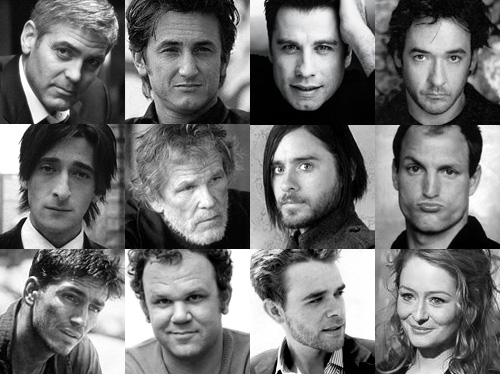
Due to its nature the war movie genre is rich in movies with all-star casts. There are many that I like. I was looking through the casts of quite a few and in the end I was not sure if I did prefer the cast of Black Hawk Down or the one of  The Thin Red Line. Finally, making a very thorough comparison, including also minor roles, my winner  is The Thin Red Line. There is only one actor I am not keen one and he may very well be the reason why some people do not appreciate The Thin Red Line. I am talking about the fanatic pro-lifer James Caviezel.  But look at all the others and then tell me that you do not think this is an astonishing group of actors that has come together in one movie.

James Caviezel (The Passion of the Christ)

Nick Nolte (The Prince of Tides, Cape Fear)

Sean Penn (Dead Man Walking, Mystic River)

John Cusack (High Fidelity, 2012)

Elias Koteas (Shooter, Shutter Island)

Adrien Brody (The Pianist, King Kong)

Nick Stahl (Sin City, In the Bedroom)

John. C. Reilly (Gangs of New York, Magnolia)

Woody Harrelson (Natural Born  Killers, The Messenger)

John Travolta (Pulp Fiction,Love Song for Bobby Long)

Ben Chaplin (Murder by Numbers, The Remains of the Day)

George Clooney (Oceans Eleven, O Brother, Where Art Thou?)

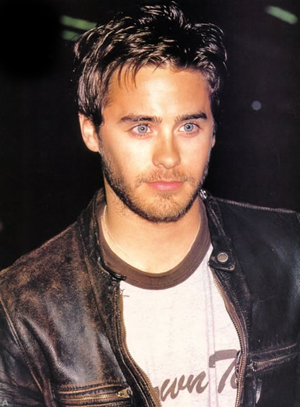
Jared Leto (Requiem for a Dream, Alexander, The Fight Club)

Miranda Otto (Lord of The Rings, War of the Worlds)

and many , many more.

Which is your favourite all-star cast? The Longest Day? A Bridge Too Far? The Great Escape or The Dirty Dozen?

Der Stellvertreter aka Amen (2002) The Disillusioning Reaction of the Catholic Church to the Holocaust

In the beginning of Costa Gavras´ Der Stellvertreter aka Amen we see how a group of children with special needs is transported to an extermination camp and gassed. When this is being found out people are shocked and taken aback and, together with the Catholic Church, they fight these practices that are ultimately stopped.

This noble reaction of the Church is not repeated however when they are asked for assistance in stopping the extermination of Jews. Nor do the alerted Allies help. Der Stellvertreter explores the shameful failure of the Catholic church and the rest of the world.

The SS officer Kurt Gerstein (Ulrich Tukur), head of the Institute of Hygiene, is a chemist and the developer of the lethal gas Zyklone-B. He thinks that this deadly gas is used to free the concentration camps from vermin and must find out that it is actually used for exterminating Jews. He witnesses this with his own eyes and his outrage and revulsion are so intense that he decides to alarm the Catholic Church. Only one young priest, whose family is of great influence in the Vatican, Riccardo Fontana (Mathieu Kassovitz), feels the urge to support Gerstein, travels to the Vatican and informs the Pope. To no avail. The Church won’t act.

The Church fears many things. They are afraid that communism might spread and are grateful to the Nazis who stopped it. They are afraid that they might not be spared by the Nazis if they oppose too openly. And, as the movie seems to say, they ultimately don’t care too much about the Jews.

Gerstein and Fontana will go on fighting and trying to inform people, to make at least the Allies act. The Allies however don’t want to act as they don’t want to negotiate with criminals. Every time Gerstein and Fontana inform someone about the extent of the atrocities the numbers have risen. From an initial hundred thousand they are soon in the millions. These numbers are symbolized in the numerous takes of riding trains we see during the movie.

As an ultimate sacrifice and because he thinks it is his Christian duty the young priest joins a transport of Italian Jews to one of the concentrations camps.

Kurt Gerstein is a historical figure. After the war all the important figures of Nazi Germany were incarcerate. Gerstein, facing trial and before killing himself, writes a report on everything he has seen. Years later he is found not guilty and rehabilitated.

As interesting as the theme of this movie is I did not find it completely compelling. Maybe because it is based on a theater play (Rolf Hochhut’s Der Stellvertreter aka The Deputy)? I don’t know. I think you will have to find out for yourself. 4/5 stars but still valuable.