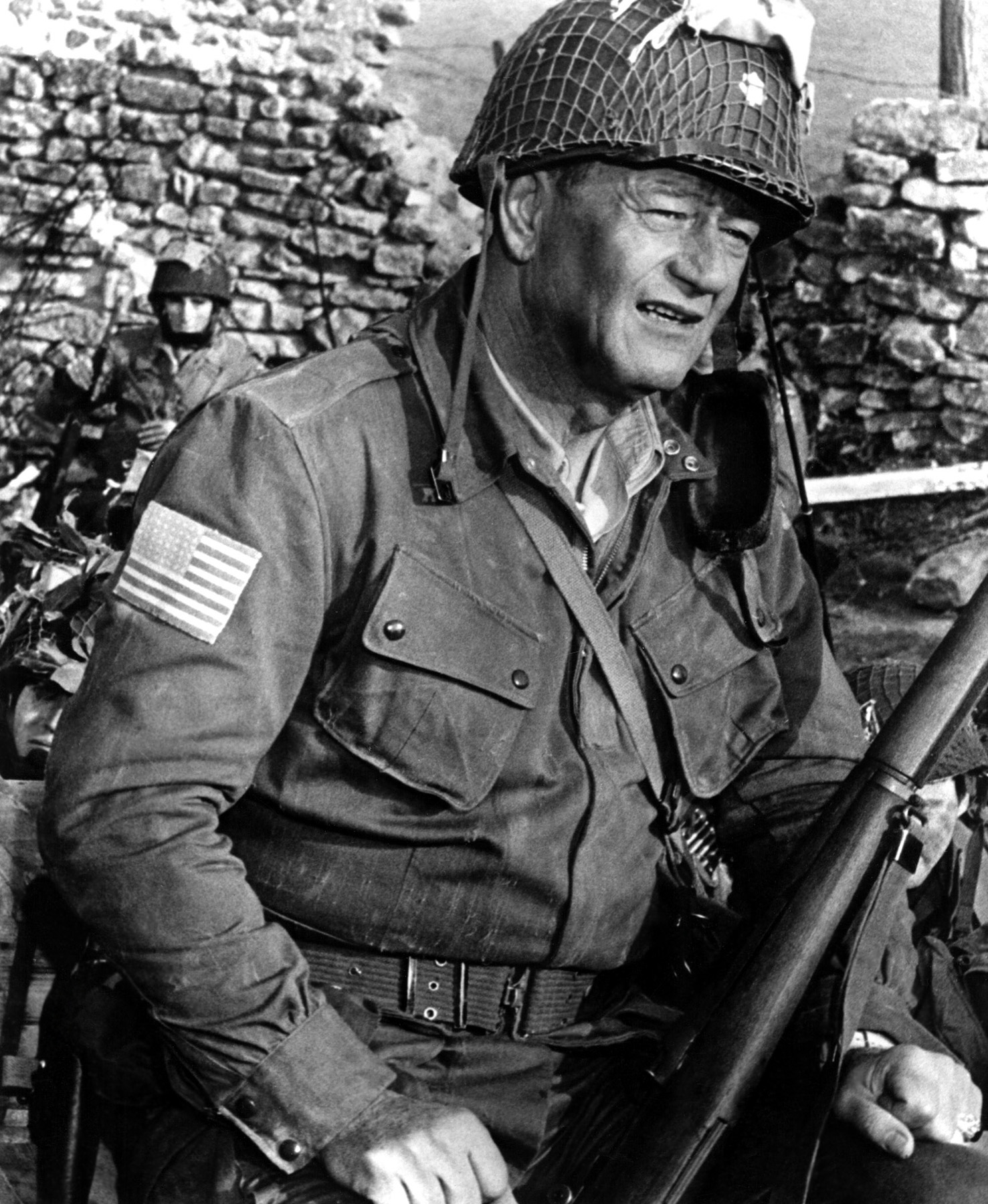
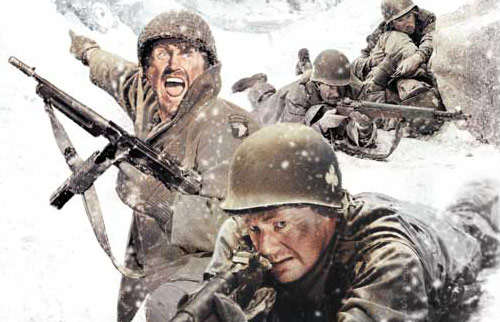
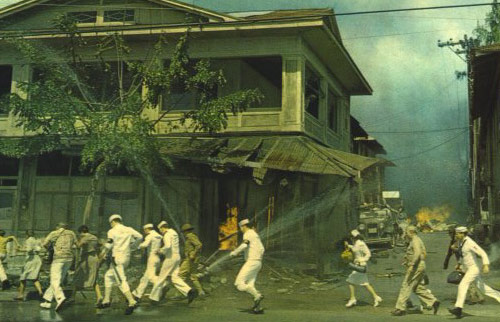
It´s been a while since I posted the last quiz and even longer since I posted the last movie pictures quiz. I am afraid it is not a very difficult one since many of the movies I chose are very well known. That´s why I won´t make a list of all the titles. Just the picture and the solution below. Have fun and don´t cheat. And, yes, the picture above is taken from The Longest Day and is not part of the quiz.
Music Box is not a war movie in the strict sense of the term, especially not since it takes place some 40 years after the war. But it is about what happened to war criminals after the war. The one or the other is still caught today. Many tried to hide in distant countries. Some live in South America but there are certainly also a lot in the US. Since I want to watch Der Stellvertreter aka Amen by Costa-Gavras, I thought it might be interesting to re-watch this one before. I remembered that it moved me quite a bit when I saw it for the first time. I found it totally gripping. As much of the suspense comes from the question whether or not the accused committed the crimes I could concentrate on other elements this time.
Just imagine for one second, someone told you, your mother, or your father was a war criminal. He is said to have left the country shortly after the war and gone to the US where he led an exemplary life as a devoted father, able worker and much liked colleague. Imagine the two of you had a very close relationship. You love the stories your father tells you about his childhood and his youth, the horrors of the war and how he managed to flee to a more welcoming country. Your son adores him, your in-laws respect him. But then, one day, the US government accuses him of being a monster and wants to extradite him to Hungary where he would be judged. That is the story of Music Box. Ann Talbot’s (Jessica Lange) father, Viktor Laszlo, a Hungarian immigrant is accused of having committed war crimes. Ann is a successful lawyer and decides, after some initial reluctance, to defend her father. She doesn’t doubt for one second that he is innocent and soon she is able to prove that there have been wrong accusations before, that the Communist countries often try to get at those who fled from them. She is outraged by the injustice that is done to her father and equally shocked by the crimes, the man who is called Mischka, has committed. Torture, executions and rape. But what is the worst he is accused of is the fact that he showed no mercy, compassion or any other signs of empathy. Mischka enjoyed what he did. Much of it took place on the banks of the Danube in Budapest, near the famous Chain Bridge. One of the last parts of this gripping court-room drama takes place in Budapest. A nice addition to the movie. Budapest is a town I am particularly fond of but when I had seen the movie for the first time, I hadn’t been there yet. I didn’t even remember that part of it was filmed there.
Jessica Lange, Armin Mueller-Stahl and Frederic Forrest, the main actors are fantastic. Armin Mueller-Stahl is one of the very great German actors. I have often problems when actors fake an accent but he does it well.
For one reason or the other, I always compare Music Box to Sophie’s Choice. I find them both equally convincing from a psychlogical point of view. Both have outstanding female actresses in main roles. And they both have this typical 80ies feel.
I was wondering how I would rate this movie. It is interesting and gripping, psychlogically accurate but doesn’t deserve 5/5. It is somewhere between 4 and 4.5 because it is a tad too sentimental.
To call this movie brilliant is an understatement. The German movie NaPola is quite an achievement. It perfectly illustrates the German concept of Schwarze Pädagogik meaning Poisonous or Black Pedagogy. Psychologists believe today that this harmful pedagogy was one of the root causes for the success of Hitler and the wide acceptance of Nazism.
NaPola is the story of two boys, their friendship and “the pity of it all”. Friedrich (Max Riemelt) personifies the Nazi ideal to a high degree. Strong, able, intelligent. A talented young boxer. It doesn´t take long and he is recruited for one of Hitler´s NaPolA´s (National Political Academy) where the elite of German youth is trained, educated and above all fanaticized. NaPolA´s are in part boot camp, in part higher education. Once in school, he meets Albrecht (Tom Schilling), the son of a Gauleiter. Albrecht is the very opposite of Friedrich. He is frail, sensitive and intellectual. His father, a fanatic, obnoxious idiot hates his son´s guts. Albrecht personifies everything he despises. Too small, too weak, too spiritual. Because Albrecht´s father is a Gauleiter, life at the NaPola is not so difficult for him as he is protected. For Friedrich it is not difficult as he is very sporting and strong but many of the others show sings of being traumatized. Discipline, total obedience and endurance are the key words of this education. As unlikely as it seems, the two boys like each other a lot and become very close friends until the tragic end. The story of the two boys is exemplary for many stories of children and young people who were sent to NaPola´s. Towards the end of the war, when it was quite obvious that Germany was going to lose, Hitler sent all the boys from the Napola´s to the front where 50% of them died.
Everybody who knows me or follows this blog knows I am a sucker for great score. None other than Angelo Badalamenti (see all the scores and listen to his work on his fantastic Homepage) who did the scores for two of my top favourite movies Mulholland Drive and Lost Highway (Yes, they are not war movies.) did the score for NaPolA. It´s perfection. Badalamenti is no Hans Zimmer, he is far more subtle.
This is a 5/5 star movie and a must-see for many reasons.
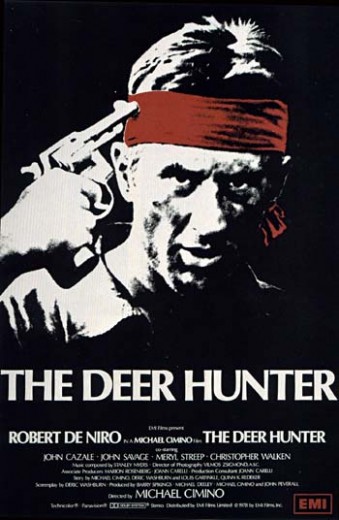
Isn´t it weird sometimes what we remember about certain movies? I don´t know when it was, but I think it must have been a very long time ago, that I watched The Deer Hunter for the first time. Looking back the only thing I did remember was the Russian roulette scene and the cage that was submersed in water. I didn’t remember any combat scenes and nothing that went on before they volunteered or after they returned from the war. What actually happened is that my memory turned The Deer Hunter into a pure POW movie.
I finally watched it again and was surprised. I saw a totally new movie. Powerful is the best word to describe it, even though this does it little justice. Sure, what I remembered was still there but it shrank considerably and took up less than a tenth of the whole movie. Strange I think, because since I have seen it again I must say, yes, the roulette scene, the whole POW part is maybe the most impressive but it is not the most important. And it is totally fictious. It is as if Michael Cimino had chosen to show the war in this way because he thought facts would not be drastic enough. Looking at all the other Vietnam war movies that have been done since I must say that especially because of these scenes The Deer Hunter is not the best Vietnam war movie there is but it is one of the more original ones. And it is an extraordinarily good movie about a certain type of people and how they were affected by the war.
What I will remember from now on is young men who live in a grim industrial town. They are second generation Russian immigrants who are enthusiastic and idealistic and want to fight for their country not knowing what they get themselves into. A bunch of friends for whom life only just begun and whose dreams will be shattered for ever. Who return having left the easy-going, careless “Deer Hunter”-personality behind. They are completely changed and broken and we ask ourselves at the end : is there still enough left of them to begin a new life?
What about you? Which is the part you like best about The Deer Hunter. Would it have been possible to leave the roulette part out altogether? How high would you rank it within the 10 best Vietnam war movies and how high within the best including every war/subgenre?
Yes, I know, it’s hard to believe but until a few days ago I had never watched The Bridge on the River Kwai. I couldn’t give you any specific reason. Just never happened. I have never been to New York either. Just because something is great, famous or whatever not doesn’t mean everybody has experienced it. While I can go on blogging about war movies without having visited New York, it wasn’t any longer acceptable that I had not watched one of the all-time favourite war movies of so many. One of the six that made it on the list about which I wrote the other day.
So I did it. I watched it and… As odd as this is, it wasn’t what I had expected. I am not talking about the story. I was quite familiar with it as is almost everybody. No, it was the cinematography that stunned me. This is a lush and astonishingly beautiful movie with intense and memorable pictures. As I read after having watched it, this striving for esthetics has been criticized (especially the cute girls and half-naked men in shallow pools… William Holden had to shave his chest hair off and we can see him in every single of his half-naked scenes with glistening torso. Can’t say that impressed me much but it is an interesting detail).
Beautiful pictures, together with great acting, a gripping story, an anti-war statement, the juxtaposition of British and American characters and an astonishing ending make a great combination. There is something for everybody in it, I guess. No wonder it got 7 Academy Awards including best picture, best director, best actor (Alec Guinness), best writing, best music, best film editing, best cinematography.
The story can be told in a few sentences. A Japanese prison camp somewhere between Rangoon and Bangkok. Colonel Saito, one of those sadistic officer types, forces the prisoners, including their officers to help building a bridge over the River Kwai. Col. Nicholson, the highest ranking British officer in the camp, opposes and offends him. As a consequence he is sent to a very harsh solitary confinement. He is in a certain way as stubborn and fanatic as Saito himself and won’t give in. Somehow though they realise that they need each other and come to an agreement. Nicholson will supervise the construction of the bridge that will be built by British prisoners only. The bridge is meant to bear testimony for future generations to the endurance and skills of British soldiers.
The American Shears (William Holden) is also in this camp. He can’t understand any of this. For him it is important to survive. Honor and courage are secondary. The only thing he wants is to escape. One night he manages it finally and makes it back to high command. There he is told that he will have to go back, accompanying a little troop, as he knows the terrain. It has been decided that the bridge will be blown up. From this moment on two stories run in parallel. The one in the camp and the other one following the little troop through the jungle (the movie has actually been filmed in Sri Lanka, should anyone wonder).
I won’t spoil the ending for those who haven’t seen it. Let me just say it is not a happy one.
I think one of the most important elements in this movie is certainly the juxtaposition of the two extremes as they are personified by the British officer Nicholson and the American Shears. Nicholson’s way is slightly outdated and not very life-affirming. Alec Guinness is memorable in this role. Apparently he turned it down at first because he thought it was too anti-British (I can’t blame him).
The Bridge on the River Kwai is based on the novel by Pierre Bulle. The ending is different from the one in the book though. Both are based on true events. The Japanese had indeed British prisoners build a railway line from Rangoon to Bangkok. Countless people died. Many years after the war the Japanese government apologized for these events.








 All About War Movies