True Blood and The Vietnam Vet

I read a lot. All sorts of things. Classics, literature, prize winners, pure entertainment, crime and thriller, some Fantasy… I am curious when I hear people enthuse about a book. That´s how I got lured into reading the first two in the Southern Vampire Series, Dead Until Dark and Living Dead in Dallas by Charlaine Harris. I do not really want to go into this reading experience here (I do understand why the series is succesful), nor is this the place to analyse women´s obsession with vampires (…. maybe…or,…..no, I don´t even go there…), what caught my attention early on was the character Terry Bellefleur. I felt he was very intense and with very few words Charlaine Harris captured the personality of a truly traumatized person. Without elaborating this character much she added another dimension to the already multi-faceted people swarming these books. Like in many Vampire novels before the Sookie Stackhouse series, one of the major themes is the outsider, someone who has lost contact with the society or was never part of it. And since the Southern Vampire books are populated with so many different types of fictitious and real outsiders like vampires, shape-shifters, homosexuals, Afro-Americans, addicts, the addition of a Vietnam vet seems of almost stringent logic.

I had read the books before even hearing of the series but was very curious to watch it. Six Feet Under will always be my favourite series so it was only logical I would at least have a look at what magic Alan Ball would be weaving  in True Blood. I was not disappointed. This series is just great fun. Very sexy and daring. Great cast, great stories, greatest intro song to any series ever (sure, it is only my humble opinion).

Writers and director took quite a few liberties especially with the cast. Many characters are much more developed than those in the book. Some are totally different, like Tara. Other types of outsiders are added, like alcoholics.

And what about our Vietnam vet? Miraculously transformed into an Iraq veteran to offer identification to the younger audience and to raise the awareness and understanding of and for those returning from Iraq and Afghanistan. This is more or less the explanation given by the producers. Quite nice, only it does not work for me. It does not feel right. I cannot explain it, but to me he is and will always be a Vietnam vet. No matter how much rationalization they put into his “transformation”.

When the actor Todd Lowe, whom many know from Gilmore Girls, was asked how he did prepare for the role, he explained he pictured a Vietnam vet that he had known as a young man. A homeless guy that talked him into giving him his cigarettes.

I wonder if there is not another reason to switch from Vietnam to Iraq. Maybe the age? Would a Vietnam vet not be much older than a guy returning from Iraq and Afghanistan? Of course this is a rhetorical question. Maybe the producers, even though they are extremely inclusive of marginal groups did not want to embrace the elderly? Now, don´t tell me this is not food for thought. Aren´t we living in a society that is ever so obsessed with age? Aren´t the vampires  ageless…always young, always beautiful? There is a certain logic in ostracizing the elderly from a vampire movie, right?

Or – which is not much better – did they think it was too hard to believe that someone could still suffer from PTSD after having come back such a long time ago? If so, what do they know?

I think they should have let this be. And I don´t buy the explanations. I would have preferred Terry Bellefleur to be an elderly Vietnam vet.

What about you?

I have to post the opening credits here for you, they are just too good to be missed and, let´s be honest, when will I ever get another chance to do this in a blog on war movies? Although…Come to think of it… what about a post dedicated to Generation Kill and  Alexander Skarsgard….

Vietnam War Movie Quotes Film Quiz 4

Do you have a favourite quote?

I have one. It is the first one below. Maybe it is of dubious taste. I don´t know. It is only a very short exchange but I think it does convey a lot. It is taken from what I think is one of the most emotional Vietnam movies. I´m sure many of you know it.

Movie 1

Sir, I don’t know how to tell this story.”
Well you have to, Joe. You tell the American people what happened here. You tell them how my troopers died.”
Yes sir.”

Got it? No, no, don´t worry. It is not over yet. I´m only just starting. Here are another few for you to puzzle over. Solutions follow as well.

Movie 2

“We gotta play with more bullets.”
“What?”
“More bullets… ”
[
gunshot]
“I gotta get more bullets in the gun.”
“What?”
“We gotta play with more bullets.”
“More bullets in the gun?”
“More bullets in the gun.”
“How many more bullets?”
“Three. That means we gotta play each other.”
“More bullets against each other?”
“We gotta do it! ”
“What? Are you Crazy?”
“Nicky, it’s the only way. I’ll pick the moment. The game goes until I move. When I start shootin’, go for the nearest guard, get his gun and zap the fucker!”
“I’m not ready for this! ”
“You gotta listen to me… You wanna stay down here and die? Go on. It’s up to you. Now it’s up to you.”
“NOOOOOOOO!”
“Hey! Him against me! Side by side! Side by side!”
“Get away! Get away!”
“Side by side! Me and him! Me against him!”

Movie 3

“They burned the flag and they demonstrated against us; it’s on the cover of the paper today. They have no respect. They have no idea what’s going on over there, Mom – the men that are sacrificing their lives. People are dying every day over there, and nobody back here even seems to care. It’s a bunch of goddamn shit if you ask me!”
“Ronnie, don’t take the Lord’s name in vain – not in front of the children. I agree with everything you say!”
“I served my country – and they just want to take from it – just take, take! Love it or leave it, that’s what I think.”

Movie 4

“Go back to your son. Make him the best son you can. That is the war you must fight. That is the victory you must win!”

Movie 5

“I just want to begin by saying to Roosevelt E. Roosevelt, what it is, what it shall be, what it was. The weather out there today is hot and shitty with continued hot and shitty in the afternoon. Tomorrow a chance of continued crappy with a pissy weather front coming down from the north. Basically, it’s hotter than a snake’s ass in a wagon rut.”

Movie 6

“You took an oath, Mr. Cole. You, too, Mr. Grafton. You took an oath to defend the constitution and obey the orders of the officers appointed over you. It’s the same oath that every officer in the navy has taken for damn near 200 years. And during all that time, the military has obeyed the civilian elected government. Now, they might not have always been right, or wise… or even smart, but they were elected. Any other way and the United States would be nothing more than another two-bit military dictatorship.”
Why did you do this, Cole? An officer with your fine record? Did you think you were going to win the war?”
“Frankly, sir, I think we’re going to lose this one. But I do love the work.”
Mr. Cole, you may find that amusing, but we don’t. Gentlemen, this is our country you’re messing with. Well, Mr. Grafton, you have an attentive audience here. Perhaps you can explain to us why you thought a one-plane war was the way to go.”
“Well, sir, we bomb worthless targets night after night – I mean, three tents under a tree… sampan repair yards that have been hit ten times already. Sir, you know the list better than I do. My first bombardier and 50,000 other Americans are dead and… can anyone tell me why? I realize that I’m Lieutenant Nobody. I’m… I’m not really sure about anything anymore. This war’s become very confusing. Nobody… nobody wants to fight in it. Nobody seems to want to win it. Maybe it never should have happened, but people do die in it. Maybe for me, it got personal, because I do know the difference between dying for something and dying for nothing. I know that’s no excuse. I… I know that. And I broke the faith, and for that, I am truly wrong. Perhaps I should hang.”
“Hanging, Mr. Grafton, is no longer a punishment much in use. But a prison term in Leavenworth is, or a dishonorable discharge if a court-martial should so decide. But whatever happens,I think it’s safe to say that your career in the navy is over. The only question’s how.”

Movie 7

“Darling, believe me, I try not skip a day in writing you. Whether or not I get a letter determines if it’s a good day or not.”


I hope this quiz was not too easy for you. Here are the movies (yes, one is not strictly speaking a movie) in the wrong order followed by the solution underneath.

Heaven and Earth, Born on the 4th of July, Dear America, Flight of the Intruder, We were Soldiers,  Good morning, Vietnam, The Deer Hunter.

Movie 1, Movie 2, Movie 3, Movie 4, Movie 5, Movie 6, Movie 7

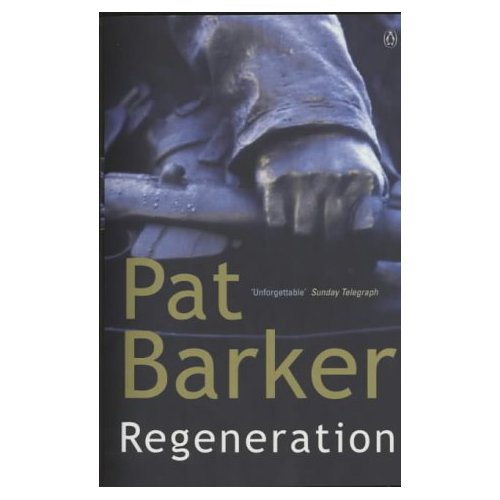
Regeneration aka Behind the Lines (1997) or Psychiatry, Poetry and Shell Shock during WWI

Based on British novelist Pat Barker´s incredible book Regeneration, the first book in her Regeneration trilogy, this movie has an awful lot to offer. Unfortunately like some other brilliant war movies (e.g. When Trumpets Fade) it never got its due appreciation by the public. This is a bit sad since everybody included in this film, especially the actors, did a brilliant job. Jonathan Pryce´s way of playing the eminent Dr. Rivers in such an understated manner impressed me a lot.

Set in WWI England and the French trenches Regeneration looks into so much more than  just into it´s central theme shell shock. Class and duty, courage and a sense of utter futility coming from the colossal losses of lives are some of many themes.

Another interesting aspect is that Regeneration also looks at the birth of a medical discipline namely psychiatry in its struggle to become a well-respected way to cure people. During the times depicted in the movie however its sole purpose was to restore the ill young men and make them fit to be sent back to the trenches.

A further central theme is the poetry of young poets such as Siegfrid Sassoon and  Wilfred Owen. The people we encounter at the heart of this movie are mostly intellectuals.

The story circles around the poet Sassoon (James Wilby) who is considered to be a war hero. He has written a letter of protest against this war that is still going on despite all better understanding. To avoid court-martial he is sent to the asylum to be treated for shell shock. He does have recurring nightmares but apart from that he seems unharmed.

As mentioned before we also find a thematization of the topic of class. The officers were mostly from the leading upper class. One patient however made it to a higher rank without the usually required background. One more  look from another angle at this complex mess of a war.

There are many other patients in the asylum that have been marked more deeply than Sassoon. Some stammer, some lost their speech altogether, others suffer from hallucinations, delusions or other forms of psychotic reactions. One of them, Billy Prior (Johnny Lee Miller), is a very interesting character, so is Wilfred Owen (Stuart Bunce), the young poet.

Dr. Rivers (Jonathan Pryce) who is also a leading anthropologist is a very gentle psychiatrist (We learn more about him in the novels. The sequels to Regeneration, The Eye in the Door and The Ghost Road elaborate these aspects. Being an anthropologist myself I would have liked to see sequels of those movies. As an avid reader it is rare I am truly impressed by books but I was when reading this trilogy. Unbelievably good.). He tries to heal by listening to his patients and help them regain their memory of often unspeakable horrors. Empathy and compassion are Rivers´ trademarks. He cares deeply for his patients and it is tragic when he  ultimately realises that all he does is cure them to send them off to face a certain death.

During the movie we are also shown one other doctor´s techniques at curing mutism originating in shell shock. They are revolting to say the least.

What made this movie so remarkable  is the way it chose to show the scenes in the trenches. Even tough it is a color movie, the use  of color during the trench scenes is attenuated, creating almost black and white sequences. This is convincingly artful. The just middle between the black and white of All Quiet on the Western Front and the corny choice of color in Passchendaele.

Regeneration is one of the best war movies on WWI. It excells in showing the absurdity of war, friendship among men, the birth of a discipline, the power of poetry to convey even the most horrible adequately. Yes, it is a rich movie. Would I want to do it justice, this already long post would be at least three times  longer. Putting  my review in two words: Watch it!

Should you be interested in more background information you should read a first hand account of one the people shown in the movie.  Why not read Robert Graves´ (played by Dougray Scott) autobiography Goodbye to All That?  Graves was Sassoon´s closest friend and responsible for his escaping court-martial. Of course Paul Fussell´s book  The Great War and Modern Memory does also take a closer look at the above mentioned poets. This is dense however not less recommended reading.

Regeneration at amazon.com, amazon.co.uk ,amazon.de

Everyman´s War (2009) is retelling The Battle of the Bulge

I don´t really know what to say about this movie. Basically I think it is a missed chance. It contains too many flaws to be really good but still has quite a few touching moments. One would like to grab the filmmaker and give him a good shaking because it would not have needed much to be satisfying.

Everyman´s War is based on the story of Thad Smith´s, the film director´s father. Sgt. Don Smith was part of the 94th Infantry Division fighting for Nennig, a small town in Germany during the Battle of the Bulge. The Battle of the Bulge was one of those notorious big battles that had to show up with an enormous cost in lives. Being one of the decisive battles, the last big Nazi offensive, it overshadows other battles like the one at Hurtgen Forest that was so skillfully depicted in When Trumpets Fade. The battle of  Bastogne Forest that we saw in Band of Brothers is also part of the Battle of the Bulge. Smith lands in Europe around Christmas 1944, just when the offensive begins and stays in Europe until the end of the war.

The tragedy of the battle is well shown in Everyman´s War. The Army command misjudging the German´s will to fight thought they would never attack during ice-cold weather, snow and temperatures below zero. But they did.

Sgt. Smith´s courageous fight, the love for his comrades and his despair about losing them is well shown. So are the battle scenes. As long as there is no music all is fine. Sadly the choice of music is bad and ostentatiously corny. And so is the background story, the home front bits  (think the end of Saving Private Ryan and dip it in sirup).

This is frustrating as the main theme, alluded to in the title, is nicely executed. This was everyman´s war. Everybody was in it. The French, the English, the Americans, but also the Germans and the German Jews. Moments where the film achieves to make us feel sorry for everyman involved are truly good.

One last word on the use of language that will only annoy people who understand German. 90% of the actors impersonating German´s are not Germans and have bad accents and an unintentionally funny way of pronouncing the German words. However this will not bother speakers of other languages. Apart from that the portrait of Germans is quite just.

Having said all this I just think it is a pity. This could have been a good film but now we are left with a 3 (out of 5) star achievement.

History versus Story or Platoon versus Hamburger Hill

I named both these infantry combat movies among my Top 10 favourite war movies (of course, since this list ist out there for everybody to see I doubt its content. Typical.). Apart from thinking that these are great representatives of the genre I think they illustrate wonderfully the topic “history versus story” and why critics often rate the second as the better movie, whereas the general public will be more likely to prefer the first one.

Hamburger Hill is foremost based on a historical event, namely one squad´s  battle for Hill 937 in the A Shau Valley of Vietnam from May 11- 20, 1969. The squad consisted of 14  U.S. Army soldiers of B Company, 3rd Battalion, 187th Infantry Regiment, 101st Airborne Division. The battle was later called Hamburger Hill since the losses were so high and the American soldiers literally shredded to minced meat.

You can not be more precise than this when chosing to tell a story in a movie. That is the theme, and that is what is shown. No niceties, no made up story, no sugar coating to make the bitter pill go down any better. War movies don´t get any more visceral than that.

And then there is Platoon. We know the year and that some events resemble other events that happened but apart from that this is purely fictional. Especially the whole good and bad officers theme and a young soldier´s loss of innocence. All these roles are played by famous actors which is not the case for Hamburger Hill.

As I said before many critics rate Hamburger Hill higher than Platoon and from an intellectual point of view I can´t blame them. But I don´t agree. They think it is more realistic. Somehow morally superior. There is not a tiny spark of beauty in that movie. OK, I agree. But… If we really wanted pure unadulated realism, authenticity, moral education, unambiguity, shouldn´t we stick to documentaries? (And even those can show us whatever  they want to make us believe has happened. But this is not the subject here).

I´m afraid but I like a  bit of symbolism and an interesting story. And I also judge movies by the criterion whether their pictures stay in my memory or not.

For many of these reasons  if been considering lately to kick out Hamburger Hill of my Top 10 list and integrate one of the most artistic Vietnam war movies ever: Full Metal Jacket.

Yes, right, why wouldn´t I?